About this talk
This talk discusses the Drupal AI initiative, highlighting the collaborative efforts of various panelists to address the challenges and opportunities presented by artificial intelligence in the Drupal ecosystem. The speakers emphasize the importance of maintaining Drupal's strengths while integrating AI capabilities, focusing on structured content management, governance, and accessibility. They explore the potential for AI to enhance Drupal as a content management system by enabling advanced features such as editorial assistance, workflow automation, and content quality review. The panelists express their hope for widespread adoption of AI functionalities in Drupal and encourage participation from developers and agencies to shape and contribute to this evolving landscape.
Full transcript
All right, we're gonna start on time. So, uh, we have a lot to cover and we're very excited to be here. Welcome everyone. Let's give a very quick intro to each one of our panelists up here. We're uh doing a year review with a Drupal AI initiative. Hopefully, you're in the right place. If not, stay the program manager for the AI initiative and I'm gonna hand it
over to Jamie for a quick on the initiative. >> Oh yeah. So um AI initiative is a collection of a whole bunch of >> my name's Jamie. Uh I'm founder and director of a company called Free Give where we specialize in native. uh when I became obsessed with AI and um yeah been involved I'm not a programmer being involved in the AI module >> All right awesome
and Kristoff >> I am I'm one of the founders of internet and we also one of the founding companies of the triple initiative and very happy to be here. All right, Scott. >> Hi, I'm Scott Falcon. I lead applied AI and agent success at Aqua. I used to be a programmer until I got really lazy and started using AI for just a while. >> All right, Paul.
>> Hello. My name's Paul in the UK. >> All right, awesome. And I forgot to say I'm with Digital out of Australia. I'm in California, though. All right, cool. So, um, before we dive in a little bit more about what the AI initiative is and what we've been up to, I would like to address maybe a big AI elephant in the room. So, let's start there. And
there's one question actually came in from Slack, Drupal Slack channel. So, let's start with this one. What are the greatest challenges you see for Drupal in the era of both generative and AI in the long and short term? And I'm gonna start with Jamie on that one. >> Yeah, maybe I'm not welcome anymore discussing this question. Um, yeah, I think there's a lot of interesting challenges and
opportunities with this. Um, I think Um the the the clear challenges are will everyone want to write code everything that Drupal does uh and will they just ignore this all um and then I think the other challenges are AI generated code going into core can that ruin Drupal will it exhaust all the maintainers etc but then the flip side is the opportunities are I think there are
lots of things really powerful about Drupal as a um foundation for you to do stuff with AI on top of. I think there's lots of powerful things about the structure of Drupal and how it's made and its community and the modules for AI to make use of. And I think there's a lot of power in the way that we control what we do inorgctively and helpful in
actually pushing forwards. >> All right. Awesome. And kind of a followup to that is with AI moving so asked, "How do you prevent Drupal from just being a wrapper around LMS rather than a true innovation platform?" And I'm gonna ask Scott to address that. >> Yeah. Um I would say on that one really is focusing on the strengths of Drupal. They are still the same today. the
foundations that have made strong for two plus decades. Structured content, governance, review, that stuff is even more important because what we're going to see and the problems that we're going to have ahead of us aren't new problems. They are problems at a scale that we've never encountered before. You know, we've dealt with things like how do we deal with somebody that comes to a site and leaves
comments that aren't useful or spam? How do we moderate and evaluate those types of things? Drupal is really good at handling those problems but we have an unprecedented scale coming for them. So focusing on that area for Drupal helps us from becoming just a wrapper of something else in the ecosystem. It is a real problem and a real pain that we know and have now and it's
something that we've worked hard to solve for a very long time in Drupal. So we can double down on that. >> All right. Awesome. And before I hand off I wanted to make sure that other folks were able to chime in as well. So what keeps me up at night when we think about the challenges that are lying ahead is like what is what is Drupal in
an AI driven world. I mean we just build websites today. We make like nice UIs, content types, fields and stuff. Yeah. And now we generate things. So what is you know I think the opportunity is huge because as said we have everything that's needed for building expert level AI powered CMS systems but I don't know what it looks like. I don't know what the workflows are going
to be that content creators, moderators are going to use. So I don't know like how can should we design next level CMS systems, you know, like what should we build next? So there's so much uncertainty there. So that actually, you know, that's that keeps me up at night thinking about that. On the other hand, um what I look forward to as Scott said, we probably in the
best position of all systems in the world to just like build an experience that is just truly made for an AI powered world. >> All right, I'm gonna let Paul chime in and then we'll Switch gears a little bit. I think we need to just consider different ways to be useful. >> All right. Awesome. Okay. So, that addresses the the big picture and the big elephant in
the room. So, you have kind of an idea of the challenges that were faced more globally and also maybe some of the reasons why Drupal is so well positioned to succeed in this landscape. Um, I want to zoom out a little bit and let's talk about how we got here in the first place. So, how did the AI initiative actually start and why didn't we just let
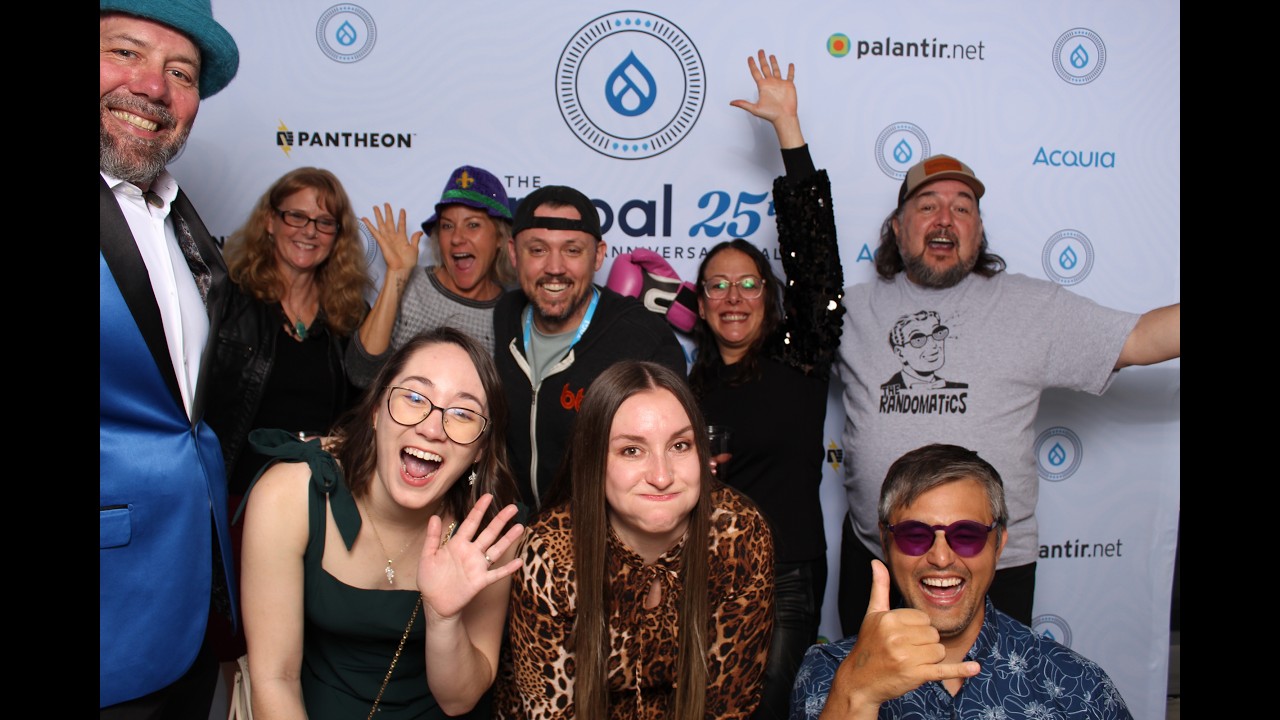
the community build it organically? And I'm actually going to start with Paul in this one. >> Well, I mean this picture is taken multiple times in last year and the reason that the initiative was first thought of was to try and get more focus. There was perhaps duplication of effort and also perhaps the features weren't necessarily targeting the customer heavily. So approach structure around this and also
some of the bigger challenges that exist in AI it wasn't necessarily was going to be able to deliver that. So that was another reason why the initiative was was so conceived on the technical side of things. >> Yeah, maybe we'll bounce to Jamie maybe a little bit more on the the technical reasons for the collaboration. >> Yeah, I think um one thing um about that is that
we did start we started with the AI module and so that was that was a collection of different people because we learn very we did feel very early on that AI was going to be so big that we couldn't let a situation where you know this was all about becoming the commerce in the same way the commerce guys was for commerce we're going to have like the
AI guys of AI there's a big one agency that does AI and that's their specialty we learn we we really felt this was going to be so huge that everyone had to get in on on this everyone had to learn this everyone had to become an AI expert eventually uh so we started there but the problem is that Um in the the module I was the only
business owner. So a lot of the other people were developers and whenever we tried to move forwards they would have to go and ask their employee employers uh to try and carve out time for it. And it was really early that we felt no we needed something that was it wasn't everything was going to be agencyled but we needed some level of it that was agency where
the business leaders who are trying to push this forward sell things use Drupal have those resources could collect together collaborate together and uh make sure that we're building this alias in a way that works for us that the tech has to be good but it has to be something that's sustainable it has to be something that makes us makes us at the end of the day that
that serves our clients. It can't just be a fun tech project. Um because that's never going to last. Uh and so the that was a big motivation for why I think we all got together. Organizations that believed in this felt like we needed this to survive, felt like this was really important. Let's go all in. We're going to meet together and try and collaborate and uh steer
things in a way that will make this survive for us. >> And then next I'm going to address to start with, which is who's actually in charge of making sure these AI features are stable enough for an enterprise site. >> Why are you asking me? >> Oh, I don't know. Little birdie told me. >> Good good question. I I guess maybe we can take it a little
bit from from the way how the AI initiative is organized because as Jamie said, like AI is just moving at this incredible to build stuff to just keep up. At the same time, you also have to stabilize stuff so you can actually ship it. And um so we've divided the work into two aspects which is not common for product development that you have like some innovation work
stream where you test out new things and at some point they just become ready for productizing and then they come over in the product work stream and that's where they're then assembled then demos are being built trainings are being made you know they they're checked from UX and quality assurance teams and then they're shipped so that's how we organizing it too and I work on the product
side that's why the question. So, I'm trying to trying to make that happen or that's why make impact and um yeah, that sounds organized. >> All right. Awesome. And uh Scott, actually you're a newer uh recruit to the AI initiative. So maybe from more fresh perspective, you don't have quite the history with the team. Maybe you can chime in what what you're thinking about the evolution. >>
Yeah, I mean I think big thing a lot of times we get questions about what is the initiative doing here what do you think about this funny part about a leadership team is you often don't have the answers right so really is looking for the community what are the real problems how can we approach the things and one of the things I found is it's very great
how this is super collaborative right working across many different companies trying to solve a similar problem is really fun that's that's been a new thing for me in the past couple months I met more people in the Drupal community in the last four months than we probably had in the previous 10 years just because we were working across different so that part is exceptional and you know
I would do a call out for this from the community like become involved and help us define these roadap we work you see the issues you're going to be there at the meetings so become involved because again we're guessing we think we know what we want to do but the stuff moves so fast like the opinions changes on a daily basis. >> Yeah. Awesome. Thank you. Um
and maybe uh we'll talk a little bit about the things that have been a little more challenging. So building any large initiative is a huge undertaking with its own challenges and hurdles. Uh so what are some important challenges we face the initiative and getting to where we are today? I'm gonna start with Jamie >> Yeah, it's been interesting because um there's nothing been quite like this in
we would think a lot about it like when loads of agencies collaborated on something like this when it with money with like not just building things in issues but really working on it and we've had times during the Drupal 8 we've had sort of kickstart to sell things but usually there will be money for one dev to do a very specific thing you know using core this
concept of us of us pulling resources pulling money and and trying to do something together not clearly defined. We're working that now as we go along. It's never been done before. So, um and we've created a completely new structure alongside the DA uh in houses. I think that has caused a lot of uh challenges because you know we have different organizations that are you know everyone involved
in this is to some degree an interestedly a leader in their own organizations uh who who's able to ask people to do things and it just gets done. But we've got everyone involved is like that and it's an entire room full of people who are used to being leading and now there's like 30 of them. So trying to find a way that people like that can collaborate
can can work together uh is has been a challenge but it's a very important one and it also you know there there's degrees to which we're aligned and there's degrees to which we'll be competing with each other. this degree to which where our different organizations have different ways in which we succeed or make money that we approach things. Um we've never we've never had to find ways
of bringing all that together in a dup community before. It's always been there's the issue cues where that stuff is happening and then we can build our business however we like. Um but it is something that when I speak to people in other uh frameworks, organizations, um they look up to us. They're very excited by what we're doing because um there's just very little in open source
that does something like this. Most things there's one company behind it like the open core stuff. Sometimes they dump the open source stuff on on people and do it. Sometimes they just try to encourage you to pay for their other products. But this has been a truly collaborative experience. Uh and so it's been a challenging thing, but I think worth it. >> I'd like some of the
others to chime in on this one. Actually, a nice example that I had recently. So at our company, I'm in charge of leading the R&D with like a bunch of people. Yeah. And I get to make a lot of decisions. Yeah. So like I met things of course not all alone, but I'm the main person driving it. And now with 30 companies and there are 30 people
that are equally good or much better than me and I get to collaborate with them and the stuff that comes out. So we recently scoped the feature and then I worked here with Scott. Yeah. And and it came out 10 times better than I could have done it alone. Yeah. I think that's amazing. So there's like suddenly people collaborating on on on a level and with a
focus that has have not been collaborating too. Yeah. That we have never been collaborating like this before. So that's actually really giving a lot to to I think the quality and speed of of Drupal and Drupal in particular. >> Yeah, I think that's that's great. I think I I coined the phrase that we're dropping our badges, dropping our logos in order to collaborate. I think Paul wanted
to chime in as well. Yeah, I think the marketing side of things has been one of the most challenging ones. When I was sat there, I was pretty daunted at the idea of what we were about to try and do for many years, not really doing a great job audience that's what we had to do with Drupali and we didn't really have the infrastructure in place in
terms of processes but also people. So, It's taking me a while to get there, but in the room over there excellent people who are really capable and enthusiastic and basically running the track ahead of us going within weeks of the initiative being founded. We had the opportunity to go to London top week which is a big event,000 people in Oakland. We only have three weeks to get
a And then all of a sudden go to Paris to one of the things that's been for me is almost like this opportunity forunately as we've got more so we can start to deliver a lot more recently. >> Very awesome. Yeah. Go ahead. >> Yeah. I would say, you know, it's interesting. One of the challenges as well is the problem that everyone else laid out working with
a bunch of different companies that were used to working on their own and they can just say, "Let's do this." There are new and interesting problems within. So, I would actually encourage you don't have to be a technical expert or an expert involved. There are very real and interesting problems to solve here that again all come down to what does it mean to work at scale in
a new way. So, programmer, project management, if you're a content editor, especially if you're worried about what AI means for the area that you're an expert in, come participate because I think being part of it, you're going to see these problems that are going to need to be solved rather quickly. >> Yeah, definitely. And UX as well, that's we have a UX team, we've got a QA
team, got a marketing team, and we've got engineering teams, innovation, develop, all sorts of stuff. So, uh project management. Yeah, definitely come come see me. All right. So, uh, we're gonna switch gears again. And so, we've talked a little bit about kind of how we, you know, some insights of like the big elephant in a room and how maybe Drupal is is positioned to to address that
and also how and why the initiative was created and some of the challenges along the way that, you know, things are moving along. There's still challenges, but we're working through them, which is great. So, let's also talk about some key things where we've made progress over the last year. Um, I'm gonna start with Scott on this one. Uh, so it's been one year. Uh, what right now
could a site owner actually install today that will save them tomorrow? >> That's your question. >> Yeah. I'm going to spin this answer a little bit because all you need to install is Drupal, right? There's nothing special that you need. And again, this is because the are there like if you really want to use AI at scale if you want to bring in cloud code or any
other agent that you can think of at a fundamental level because Drupal has a strong structural base it has APIs it's open it's documented these agents can be highly effective in the system now so I would say don't spend your time looking at what the new and shiny tool is try to bring an agent in of some sort and the most basic version that you can and
see what's possible and you will be very very impressed. In the demo to Drupal that you saw yesterday, there's nothing special in that. That's a stock Drupal CMS that we gave the agent a little bit of guidance on what it should do and because of it understanding of Drupal and then the guidance of pay attention to what editors are going to need to do the best that
we know it was able to get there. So there's no magic behind it. There's just potential. bounce over to Kristoff on this one. How about some uh some features that you feel people can install right now and uh you think they can just run, you know, do some cool stuff? >> Nice question. Nice question. So, the the questions are not prepared. I literally don't know what's coming
when she says this one's easy. It's good because yesterday um I actually did a workshop on um did a work on what you could with Drupal out of the box today. Yeah. The way I structured, I just put like all the commands that you need to use to install with composer like to configure and stuff and I put screenshots of everything that you said to do and
showed it and it was 50 minutes of features and people in the room much like you were sitting there and actually can I show can I have a show of hands who has Drupal installed with AI now the other who has not tried it yet. Okay, so it was similar yesterday and I just saw that people just blanked out, you know, from all the stuff that you
can do without doing anything. So you can literally just turn on, you know, a rag based search where everything gets indexed. You can ask questions and chat answers. It does that in a really nice way. You can do that in five minutes. Probably you can't do it because you don't know which buttons to click because there's so many. Yeah. But this was assembled like in a workshop
so that you can actually just follow along. Then actually when I just made that workshop like with a colleague together, it actually blew my mind how much we had built in the last 12 months. It was just mindblowing when you show this to somebody else. >> Awesome. And Jamie, how about for you? What do you think is the single most feature in Drupal right now that clients
actually want? >> I think um the the most powerful thing has been this like which is actually not common phrase inside. for what we've been doing up until now focusing on marketers being able to use inside AI and it is powerful and there's a lot more coming as you saw about that I think it's going to be special but the easiest cell is the outside in right
now but you can use broad code and and yes you can do pure Drupal but if you use this AC nebula there's some other tools coming to it if you use this collection of skills and tools we've got around it you can bring things from WordPress into Drupal or we've been for that source. So, it's like, you know, a SAS version of it. Um, which, you know,
it's harder to bring things into SAS because it's a bit more limited. You can't write loads of code, but it but it does work. We're getting to a place of bringing work into Drupal in like an hour or two. Um, and we we changed our goal a bit where we we're targeting uh developers who are good at AI and Drupal. And I think in in the very
short term, there is a ton to be done there. Just getting more stuff in, moving stuff around. A lot of the stuff we've learned there is going to come into the inside out Drupal as well to make it so that we can do more of that inside Drupal and start using the develop with the uh actual content management experience. Um I've seen really great results our website
the 3D AI website right now is um we used all these AI tools to create it inside source and I as you can tell with this answer tend to write a lot and talk a lot. Uh and I I wrote down what I wanted our to say I've been trying to build our website for about 15 years and have never been happy at all with it in
any way. And I pointed at a couple of example sites I liked and I wrote gave all of my copy um and I saw AI's thinking as I wrote down your copy and it said start with yes I can see how that's quite a lot that you've written and you wanted much different style and then it wrote it. I was like this is amazing. I showed it
to a friend who were sort of building it for. We wanted our website to change. We could see it show other people and it was the first thing we did was way better than anything I've ever been able to do for my own site for you almost 15 years. Uh and so we're going to see more of that in Drupal I think especially with context control center.
Um so these are the two areas I would say migrating into Drupal and then really using AI to help you with your content management experience. And I'm gonna bring it over to Paul now. I have uh so market marketing has obviously been a huge focus of the initiative. What have we achieved in terms of getting outside the Drupal bubble? >> Okay. Yeah. mult multiple events we started
off tech,000 people turned up there. We were absolutely exhausted by the end of stand there and People had never heard of Dr. People had heard of Drupal and probably a few years ago were coming to have a chat to see what it was like. So yeah, we were getting a lot of curiosity and enterprise. We were next to people like where we should be and then shortly
after that we went to New York's to 80 people but 140 people turned up the organizers were a bit surprised at our ability to sort of mobilize an audience so it was wildly successful And off the back of that they've offered us to be in New York City in 14th of May this year. There's another event that we could do in Melbourne and also there's one in
India. So we're going to go back to Paris. We've also got plans to do a really big event. All these events are all about customers. So we're looking through case studies and getting people to implementations of Drupal to get them started. So we've also many webinars start to do these customer through the voice of the customer because they start to >> Yeah. And one interesting thing about
some of these events where we have a booth, uh, everyone, so all the companies that are there, they actually all wear a Drupal shirt. It's again dropping that badge, dropping that logo and and uniting to try to grow the market uh together so that we all So I think that's that's super amazing and it is not something that we've seen all that much. One of the usual
things that we were agreeing at the start of the initiative which I requested with the DA was that we can promote agencies to harm DCPS because we knew that there weren't that many case studies. So kind of like dropped and we're doing all that perhaps makers but because they perhaps got good case studies then it's beneficial to us they're going to people's market. >> All right, great.
So, um maybe a little deeper dive into some of these features that we've been talking about. Um so, is there something that is like super meaningful that's just not text generation that just it's something that we can do in Drupal very easily, but um you know, maybe it's it's something very different. I don't know. Uh Jamie, why don't you take Um yeah so one thing we've started
doing again with the coding is we created these free agents in Drupal um uh field content type for Drupal CMS 1.0 and we had a Drupal CMS assistant that could do that. So we had maybe one agent you can say you had three then with you know 1.2 We had experimental canvas AI that could do that as well as as two separate things and the process of
making these new agents uh for a while was quite complicated. So not many people did it and it would take some time. Voding stuff has got very good and the base of what we've done the foundational workers got so good that uh you can now have AI agents inside Drupal create agents but also what you can do is have AI like actually write code for the tools.
some new tools aren't there. And so Marcus um put together some little examples like the AI agent collections module and it is a proof of concept but it's working where he just listed a whole bunch of things you want agents for and now we've made them and so now there's a good list of like 50 agents that can kind of mit a can change all the system
settings. It's got one for like site XML map stuff. It's got field It's got like ECA, it's got a like everything. Um, and uh he's created a kind of with a chatbot you can do at the name of the agent and get things going. It's not user friendly yet. I don't know. We need to test that like the first time I got installing I was a bit
overwhelmed by how much AI can physically do in Drupal. So there's that kind of question from Jurassic Park of like you know I know we can but should we? And so that's like the next stage is like where are we going to go with that? But it is just the case that we need to get the UX working. But the agents are there that pretty much every
area of Drupal now you can have AI control that a lot of people struggle when it come to Drupal. They don't do it all the time like figure out where things are, what to do, but it's now there. They can now go to a single chatbot, a single interface and everything that is in Drupal can be changed by AI or can point you in that direction. Um,
and so I think that's quite exciting compared to simply generating the content. Although that is getting really exciting. Being able to generate the content in a structured accessible way is also very >> I'll bounce this to Scott. >> Yeah. I'd say the the part that's most exciting is going to be under the topic of agent experience. Can we make Drupal the best place for an agent to
interact and be part of team? And a lot of times I think of an agent as you may not always know if it's a human. or an AI agent. A lot of times it's going to be a hybrid, but this is the area that we absolutely can nail. If Drupal becomes the best place for an agent to be able to successfully work, we may look back at
this Drupal and be like, remember when it was a thousand people? Because there are 10,000 people at Drupal now. This is our opportunity to go after. And it's a huge thing that we really need to figure out. What does it mean for an agent to work as part of us? part of our team with us. So, I don't have an answer. Again, I think we have the
foundations there for that, but it's a huge problem of scale and it's a huge opportunity for where we're going. >> All right, I'm gonna go to Kristoff for maybe some more fine grain. You talked about your workshop yesterday and maybe some very concrete examples of, you know, is it what's strong in Drupal? an editorial assistant, classification, search, uh, workflow automation, something else. Like what are some of
the like very concrete examples that people can go like, "Oh yeah, I can use that. That makes sense. I understand it." >> Um, so what's very low hanging is that you just improve the quality of your content. I mean, stuff like, you know, the images giving them text or maybe have a description of the image or, you know, you tag the images so that you can actually
discover them later. You know like when you go to media browser you have to type the title and the title of the image was unfortunately the file name from your phone you never find it again. Yeah. So for example by simply having like a text field there that says smiling people sitting in a room listening to a initiative talk. Yeah. Then you can at least find that
again by typing you could even make that semantic uh semantically searchable. So that's super low hanging turn that on. Yeah. So we have recipes for that. Um I think the The most uh exciting thing that is coming is that you just have AI review your content. Yeah. So review for quality. So for example um accessibility, readability, compliance with your brand tone, maybe you have some guidelines or
some policies that you need to follow legal uh legal restrictions or something like that. Yeah. And um especially if you run large websites and then pages get old but you keep them because you know you want to keep the URLs and um there's just no way that you can keep them up to date. And I think that's the most obvious case that can be solved in the
near future. That's as a matter of fact what he is working on right now. And um so I think that's probably the most usable one. Everything else what was mentioned is also usable and you can already build that but that actually is much more of a shift. What I just said is just that is just relevant today. All right, awesome. And now I'm gonna uh bring in
Paul to the conversation. So we have all these amazing features that you can install and use. How are we making sure that the Drupal community and beyond that know about these features? >> Well, this this week we've got 10 specialists in different responsibility is to make sure that materials are ready at the time. So there'll be materials to explain what the benefits of these features are and
also these demos straight away. to be able to work at the demos before the features finished agencing leads additional uh track leads. So that's awesome. Um, okay. So let's shift gears again and you know we've talked about you know what we can do with triple AI. Let's talk a little bit more about the road map. Um, so what is the next big capability that could generally shift
how people think about CMS? I'm gonna go with Scott on this one. >> I'm probably gonna keep giving the same answer. Oh, maybe we'll maybe >> I know right now like I I I it's not so much a new shiny feature. It is truly can we understand who is taking the action in the system and it's a really hard problem to solve right now. So if you
think about stuff we've done for abyss for you, right? So is the agent acting as you and taking the actions? Is it acting on its behalf under its own identity? So we're actually going to go back to a lot of the same problems that we've had to solve around groups and permissions in that guard to really have that traceability responsibility. So again, not a shiny new feature.
It is executing on the foundations that we have there in a way that makes sense for the scale that we have to. >> All right. And maybe uh another question that's sort of related is which roadap item is the clearest example of Drupal shaping AI rather than just reacting to it and maybe I'll go with Jamie on this one. >> No, I think uh the context control
center is one of the biggest ones. Um but it is um you know I I do keep exploring whether or not this triple AI stuff is is going to be a real thing and I I'll I'll try out other other tools and I've been doing a lot with just clawed code and pure markdown files in a file system to try and solve a couple of problems that
we have to deal with like one person has something where their organization works in the rail industry. They've got an agreement with the government what they're going to do is 800 page legal document whole bunch of tasks that they have legally said they're going to achieve. and she went to her IT team and um they said hey I can't really do this it was too complicated and
she tried it which actually was 800 page document was too hard and then on the train special way back from Drupal England we coded something in Drupal that would allow us to use AI to like split up all of the pages uh into single markdown files and then on on a page by page basis create tasks that could then link back to the original thing and and
learn how to separate and we're able to like improve the prompt to get it working well. And we're finding that where to do things really well with AI, you do want a lot of intermediary steps. You want a lot of context stuff. You want a lot of planning documents. Um I think it was one person who was talking to Drupal. They made the phrase uh uh Drupal's
a content management system and AI is a content generation system. So like match made in heaven. I'm really seeing that when I'm starting to do stuff with all these markdown files, it gets really messy and it's really hard to collaborate with anyone else on those things. But when I bring to Drupal to manage all that content, uh the output becomes really powerful with a with a real
flow to get there. And so I think now that we can build pages in Drupal and we've got the context control center, both those are going to accelerate and we're going to find Drupal is actually a really good store of all of that context or that memory when you're trying to do more than just you on your own specific thing and you're trying to work in a
team organization to achieve something. >> All right, awesome. Uh look at you now. How about this one? uh what should be true by Drupal next year that would prove that the road map and the initiative is working well. >> Um good question. I think if we have a very large base then we are successful. So my hope is actually that you know very large majority of Drupal
sites do very many high profile CMS AI applications in the world. So that would make me very happy and I would consider that a big success. >> All right. And and following up to that, um you know, we have all these amazing partners and we're all working together to try to make this road map a reality. How can a smaller agency or even an individual developer get
involved and help out? So I'll start with you Chris. >> So um so we have a tiered model of participation in the AI initiative. If a company joins AI initiative, they have to pay some money and they have to dedicate some resource and that's necessary because we just need the resource to build stuff and you as an organization you want to contribute your resource because you want
to learn stuff and the money is being spent on organizing. Yeah. So development itself is just actually coming from the contributors from the AI partners but like the organization overhead is the one that's paid. Yeah. So we have like a really nice model there. Depends on the size and the region where you are. Yeah. So if you're a larger company, you pay a bit more. If you're
smaller company, you pay a bit less. Um for the individual developer, like if you're part of an organization who's a sponsor, then you would just be working like under that under that agreement. Yeah. But of course, it's still an open source project and anyone can participate. So if you are interested and you maybe want to like bring your organization forward or maybe get your in the direction
of starting to use AI because it is a match made in heaven as Jamie said correctly. Um, and you can of course contribute it. Uh, you can of course contribute because everything we do is open and you can just participate. >> Awesome. And before we get on to questions, I'm going to let everyone else have one last word. So Paul, anything you want to chime in? >>
I think I'll just capacity to be able to take people. I think we can find something meaningful for you to do no matter what role you serve in an agency. So think >> all right Scott >> I would say don't miss the opportunity. I don't know in the next 10 years if we'll see the biggest Drupal we've ever had or the smallest. It's going to come down
on how we execute. Somebody is going to do it. And I believe it can be us, but it's going to take some courage and some initiative and a lot of messy battles and discussions about this to get there. But the opportunity is absolutely massive in front of it. And I'd add to this for you to participate. You can be an individual now and go up against the
giants. You don't have to be part of a large company to have an absolutely massive impact on Drupal and the world as a whole. So don't let the opportunity pass you because that's a once in a lifetime opportunity that we have in this exact moment. All right, Sure. >> Um, yeah. Um, yeah. I mean, I think what Scott said is right like, you know, we we free
was about seven or eight of us um uh when the started uh and mostly it was me and Marcus for a while and Marcus was just working on his garden working on the automators and then made and started making these things happen. So everything that we've been doing has come from very very a place of we've been very small. Uh and so as Scott said because things
are changing so much every single person could make a ginormous difference that could impact a lot. Um and for me what I would say is the last thing I'd like to close with why why join in there is so much going on. Uh the temptation people have to just build up their own thing a new product that's their own little their company just does on their own
to do something. And with my position talking about AI a lot, I get a lot of people showing me their whole thing that they're doing. And you just get these waves where everyone sort of figures out this is the cool thing. They all build it separately together and then show me look at this thing. It's insane. Nobody's done it, but that's because nobody did it a month
ago. They were all upset that nobody did it and they all built that thing. So now the new stuff is like rust on terminal apps is the thing everyone is building and telling me about. Um and I think that is a big danger that you'll spend a lot of your time on your own building things that look cool to you but also look cool to a thousand
other people. When you join us we're all trying to solve this together. We're all working on trying to do this properly. So you can join a team of people working together towards that stuff with a very wide range of use cases, wide range of clients and wide range of technologies what are possible and try and build something that's actually going to make a lasting difference. It's going
to be significant. It's going to go into something that all our agencies can use rather than just a cool proof of concept demo that everyone else is doing and then everyone else will move on to the next concept demo. Uh, so that's why I feel like this is a really good time to join in. A whole bunch of people trying to solve these stuff together. >> All
right. And I'm gonna let Kristoff have the last word and then we'll open it up to questions. >> I think I think I think everything was said. So, um, what I think I could add is just like collaborating like the way we collaborate in the AI initiative. That is just I've never seen anything like this before. And uh the amount of wave that we're building up that's
just crazy. Like you can't do it by yourself. You just simply can't. So you're much better off of just like collaborating and we're doing this and it just feels good. >> Yeah. Awesome. I concur. Yeah. So I I can say for at least for context control center specifically, it's sort of like a microcosm of the the AI initiative. Like so much collaboration. Uh well all of these
folks right here and their teams have helped contribute to CCC in a very meaningful way. Um, and that wouldn't have happened without this. So, um, definitely I think it's just it's a very special time to be in Drupal for a number of reasons, but I'm very happy to be working alongside these amazing folks and um, the rest of the initiative team. So, on that note, uh, I
will open up to questions before we take some from the audience. I do have one that is came from Drupal Slack. Um, Uh, in the long term, do we see any of these AI features eventually just becoming part of core out of the box or will they likely stay separate modules or maybe something in between? I don't know if anybody has any thoughts. I'll leave that open.
>> I have a little bit thoughts on it. I don't know if I should or would go into core. I was just earlier in a conversation with Drupal CMS. Yeah, I mean you have put functionality where it belongs and maybe where features should be because they can nicely sit on top, you know, anyways in favor of making the core as small as possible. Yeah. So, um I
don't know. I think it's I think everything's going to be around and Drupal at least for like larger websites, you know, if they're not maybe only for a single purpose. So, I think it will be everywhere, but that doesn't mean that it's >> all right. Any other opinions on that? >> Jamie, I think >> I would say like it's a big help. It's like us, right? Build
the substrate that this actor will use in the system. That's what's important and then people can build things upon it. >> Yeah, I want you to go first because I'm going to say just echo that is the agent experience that should be important. We need to make Drupal um really great for large numbers of people to collaborate together safely in production. So I started writing up like
you know it's sort of like a little bit bold and sort of more playful a a strategy for core like a dream if I had a magic wand what would I see core like and however much that magic wand is magical and infinite it still doesn't have AI directly in core it's more that we would have much better interfaces for us to talk to core to have
things secure and um I'm really excited by a lot of the workspaces stuff the uh dashing more sort of tool API having it so that um something like a gitl like experience where in production I have loads of people changing things but because I can refer to any moment because I've got clear places where the package lives and it's and it's published because I got really good
governance it's safe to have a large number of people collaborating in in Drupal and if we can have a lot of humans collaborating together then agents can start doing that if we can have good governance for humans then agents can have that so to me I see If core, not necessarily core, but core plus contract gets better and better and better, being that place for larger amounts
of collaboration on all the things that we do in Drupal, creating content, the configuration, the flows. Um, that will be will make Drupal even better as the base for agents to do their work. But we don't need to actually ship. Drupal CMS is a perfect vehicle for that. Uh, but I do think it would be better for more of AI to be shipped with uh Drupal CMS
maybe by default or something like it. We need an experience. You can click a button, install AI just there doing everything. Um, and I do think that we maybe want to start deprioritizing some user experience stuff in core because we know that we can have agents doing a lot. Um, so we still need a good user experience in core. We still need human but I think there's
some element where we can start assuming a lot of people are going to use these triple CMS style agents to control the stuff they need to do. And that means that's okay. Awesome. I'm gonna open it up to the audience. I know we're kind of almost out of time here, but um let's go with >> Okay. So, so maybe we'll do the first question first. throw away.
All right, sounds good. >> All right. So, I think the the question was having Drupal as being the knowledge source for >> for long-term AI memory. Okay. All right. So, just for the recording, >> so um what I would say is um the complicated thing is it's really easy to make a proof of concept really fast. What's hard is to get something that's really good that everyone
wants to use. And the other thing is that it's unlikely Drupal is going to be the main place for your personal one content is more likely that it's going to be organizational. So something like Obsidian is more aimed at just you personally. Whereas the context control sector, what was very unique about it is it was all about storing that long-term memory but in a way that was
safer for you to all share that with more than one person. Um and so um to me the answer of like has it been is it not is there a proof of concept something that would look a little bit like obsidian in Drupal but is it in a place where a large number of people can easily get it and are using it uh to solve real problems.
Um and that's the hard bit that we haven't quite got to yet. So when you if we were if you were to join in working on this particular thing you're talking about I reckon a lot of the things in there would become foundational components for something that would be very powerful CMS but not for a single person but an organization to have all of its notes all
of its knowledge all of its skills all done safely for multiple people to collaborate together and that isn't really happening right now like with the claw code stuff all the tools are all about you as an individual programmer storing all of your things for your own goals. There's very little for sharing, for working together like Control Center tries to do. >> So, yes. Yes. Is also >>
come and join us tomorrow maybe. All right. Uh I think we have one in the back. We'll start there. All right. So, let me try to paraphrase the question. So, we're talking about the features in Drupal. Um, right now it seems easier just to have the AI just do it rather than have the human in the loop. But obviously, we we need the human in the loop.
So maybe there's something missing that we need to work on. Is that >> Yeah. Yeah. Well, definitely human loop is is key. So who wants to take that one? All right, Scott. >> We need to get the human out of the loop. It doesn't scale. I mean, if we're going to be realistic about what's going to happen here, right? There's no way. you know, you can put
every sign up, every check box like the system needs to enforce it so that the humans can do the things that they do well, right? So, it's a very real problem right now. There's too much of the human in the loop in the checks where it doesn't matter. Right? So, you want an agent to be able to let loose and then stop them when they go from
draft to publish. Right? Any of us that use cloud code in all of these, the first day you use it, you click the tab or the button every time to approve everything and you get really sick of it and you just let it go, right? That's not great. We need to solve for that. But we can't just say more checks on the human loop because it's not
going to work when we have 10,000 agents working on your site in one day. There are not enough humans to >> Yeah. So, it's a scalability problem. Um I will add I think one of the biggest places where we're working on this is is specific workspaces. So the workspaces module the workspaces extra stuff that is that that people are working on in workspace especially tank one. Um
we tried to do this earlier for config and it wasn't quite there. So it's a very hard problem to get workspaces working with config entities which but it is being worked on and fields again is being worked on. Um my dream is workspaces is going to be the place where we can do that quite well and it would be similar to if you're used to cla code
the way that it will like code for the wearable codeex they'll usually uh have rules that everything it does will be in a branch codeex whatever the branch name is when they touch main and there's a human button to click publish. So rather than human loop in every single step, we have a little work can all do everything he likes to a whole of things with the
contrails >> and the guardrails and then once you're happy with it, you click a button and the whole thing goes. So I I think workspaces is going to be the real key to enabling those those those things. Um but yeah, it wasn't easier to do it the other way around partly because just doing revision to stuff fields was really hard really hard and trying to do a
understandable to end users was very hard. Um, canvas, one thing that's nice about that is because it's in your browser when you do AI stuff inside canvas. Um, it's storing all the steps and then but in your local and you click a button to publish it. So that a little bit like workspaces, not fully, but something like that was really great there. Um, yeah. >> All right.
Uh, did you want to chime in? Go for it. >> Yeah. I just before we close these organizations. The whole initiative was an experiment is an experiment in how work like this before as you said already multiple companies all working together for one goal and the experiment seems to be working. We've gone from six agencies to 31 agencies and there's 51 individuals actually participating in contributing to
it across development and marketing. Not only that, you've got other partners in these conten. >> Yeah, for sure. And I know technically we're out of time, so I think what we'll do is we'll close, but um there were some other folks question. So maybe you can come up to the um up here afterwards. Um but yeah, I want to make sure that people can can go get
some dinner or or grab a drink or something before we're done. So I'm gonna thank you to all our our amazing panelists and thank you to everyone for being here and I hope you learned something. Hope you're inspired. Hope you're less scared about using Drupal AI and I hope you join us. >> I want to say thank you to Kristen for doing the