About this talk
This talk focuses on building a sustainable content governance plan to prevent digital content chaos. The speakers discuss how many organizations face challenges in managing their website content, often leading to outdated, redundant, or trivial materials. They emphasize the importance of establishing clear roles and ownership of content, as well as implementing efficient editorial workflows and processes. The session includes practical advice on conducting content audits, leveraging tools like Drupal for content management, and using modules that enhance content governance. Additionally, they introduce a framework called the 'content chaos signal checklist' to help identify and address poor content health, ensuring content is relevant and aligned with organizational goals.
Full transcript
Um, thank you all for coming in this afternoon and spending your time with us. Um, today CJ and I are going to talk to you about um, building a sustainable content governance um, plan. >> So, is your website digital museum of forgotten content? Right. >> Has Ro built up so much that you're just managing some chaos at this point? It's been probably happening for years, right? So,
I'm sure some of you and here or we've been in this situation and and you know there's a need to sweep out the cobwebs from the website and today we're we're here to help you sweep those cobwebs out and stop the madness and stop them stop them from coming back. Right. So my name is CJ. I'm a digital experience solution architect at Image X with over two
decades of digital experience in digital and I over the years I've been working in the marketing and communication departments in financial services and higher education uh before I joined IEX a few years ago and in November of this year I will have been at IMAX for 10 years. Um my team works with our clients after their um new digital experience is live and we support them with
all that stuff that falls under that umbrella of digital marketing. Um and quite often crosses over with content. Um I've been in this business for over uh two decades now. Um working in search engine optimization, content strategy and digital strategy. And so just very quickly, we're both from Vivetics. We're a Drupal focused agency. Our team spans the globe. We got about 19 people here. No, we've got
about We have 19 people. There's no 18 and a half uh of us here at Drupal Con this year from across Canada. Uh as far away as Brazil are here and as far away as 20 minutes from here here in Chicago. let me just give you a quick story about my experience working in chaos since 2005. So back in 2005, I had one of these like uh
you know, close the door, we need to talk type moments in a project, you know, and and that moment was with my friend and co-orker Kirsten. That's that's us back in the mid 2000s. And that's me dressed down with just no tie, no suit. This is 2005. And I was working a financial services company, right? So the project we worked on was a redesign for internal knowledgebased
type website. It's pretty static. It was Dreamweaver based. Um, and and it was for 3,000 financial advisors. It was in English and French. So, man, everything was manly created. It's just wild days, I guess. I was the project manager. She was one of the page builders uh in the communications department. And so, it's This is before iPhones, right? That's like two years. Uh, and for those who
are like content strategists, this is four years before that Christina Halverson's book came out called Content Strategy for the Web came out. So back then content was a free-for-all, right? Subject matter experts from dozens of departments owned their content. They wrote it. It was lawyers, marketers, product managers, uh event planners, you name it. They all had content. They had all their say. They were experts. Who are
we as these new webbies, web heads, uh to say anything uh being young at that time? Um so with that there was a lack of consistent lack of consistency and a lack of not a lack a lot of financial jargon. So you experienced that in your work but this was uh exceptional I would say uh at all levels of every department. So Kirsten in this case was
part of the project as a page builder and she was helping with this redesign and rearchitecture uh re information architecture and she really felt sense of anxiousness in her job security. She didn't know this was going to be a year and a half project. It was 10,000 pages of of content. It was just ridiculous. Um and she just lacked a sense of direction at that time and
she didn't know what her role would be. So and in that moment she actually go down in tears, right? And so it was great that we talked about this. She brings it up once in a while and uh you know after things calmed down, we were there to just figure out the next steps and our discussion really took a turn where we were understanding that it was
a constant content publishing issue. A lot of launch and leave. A lot of things are just eventually turning into rot. And at some point in the conversation, we figured out that she could just be we needed an editor for the website. So that's what we did. We tried to position positioned her to be an editor and ended up being this hidden talent. She's actually a talented writer
and I didn't even know that. Um and you know you have those hidden gems on your team. Sometimes you just don't know what their skill sets all are. So from that moment Christian switched to that editor role and her whole mindset changed, right? She really elevated the site with just having that focus and that dedication to content and helping all our internal stakeholders. So, I've seen the
chaos. I've lived it. I don't ever want to go back to that situation. But, you know, that the clarity is there. It's it can you could achieve it, right? And today, we're going to help you stop the chaos. Um, yeah, I think depending on how things are in your organization, um, content governance can't just be a policy. Um it has to be a strategic friend framework and
it can really transform um so that you can move away from you know experiencing these chaos signals in the day-to-day business um to where you have like a a sustainable operating model and that really is that whole life cycle from creation all the way through to the retirement of content and so our content governance the way that we look at it and the way that we work
with clients I don't think it's uncommon but we kind of look at it in practical terms where we're looking at um people, process and then of course the technology and these things these form sort of like three core pillars. The people that's you know when we start to talk about roles. So who's actually the site builder? Who's a content author? And then what are these permissions? Then
the process part of it is just how do you get content from that draft to published. Um, and that's, you know, the editorial workflows and that's where things can sometimes start to fall apart where we start to think of like SEO and and accessibility drop off the edge of the desk. Um, and then of course technology. Um, and this is one of the things uh so I've
been working in uh in the world of Drupal for just about 10 years now. Um, the other part of my career I've never experienced Drupal. Um, and this is one of the things that I think on the Drupal side it really excels at. There's workflow modules and there's layout builder restrictions. There's things we can do to really help build content governance. Um, you can do content governance
right and of course you can do it wrong. Um, and wanted to talk just a little bit about some of the common and kind of hidden pitfalls that that you're going to experience. Um, set it and forget it is, I think, one of the the top pitfalls that organizations experience, especially when we engage with higher ed or we engage with a nonforprofit or we engage with a
a vertical like the commercial. We see this as being one of the things that happens quite often. So, you get, you know, this content governance uh document that's been created and it's never been updated. um and the organization uh its goals and its teams and its structures change and nobody ever comes back to it, nobody ever looks at it. Um and I think what we try to
do when we're working with clients and helping them with that content governance um is that we help to kind of um think about developing a really lean, structured and efficient process that works for them. And then we're talking to them about, hey, consider doing a content governance audit every six to 12 months. It depends of course on how much content you're publishing and the frequency of that.
The other thing that I think is quite often and I'm going to talk about this a little bit later on is this idea of like who owns the content. Um and the pitfall are is that you know you you might have assigned it to a department but you never design you never assigned it to like a job role or a title and so this just happens when
you know sort of like nobody really owns a page and nobody knows how who who is responsible for updating it. Um and I think the fix is that every content domain needs to have a biological parent. So that's going to be that person, you know, and in this this case, think of that biological parent as being a specific job title within your organization. Um, and they're responsible
then for the accuracy of that content, for the expiry date of that content, etc. Um, and then training. Training is also the other area where we see quite often um, teams are struggling. And so we have a we have a project, right? and 90% of the budget or or maybe even 95% of the budget is just focused on that CMS build. And then what gets left at
the end, whatever there might be that's remaining, that might be on documentation and training. And so now the the website's turned over to the people that are going to actually use it, manage it, and maintain it, and they've not been successfully trained. Um, so one of the things that I liked about Drupal when I learned this the first time, I was just like, that's brilliant. is in
the back end of Drupal, you can add in those little help text fields, those little help cues, so that when people are using that um interface and they're updating or creating new content, they've got that opportunity to kind of tap into that. And I think um CJ's going to talk a little bit more about some of the different aspects of Drupal that will help you to build
that um sustainable content um plan, but there's some great stuff like the content mo um moderation module. Um so it can help you to kind of bridge that sort of the people um the policy or the process and then the tool. So what we wanted to share with you was um a framework sort of a practitioner focused framework if you will um and we're calling it the
content chaos signal checklist. Um it's something that you can use to help identify the symptoms in in your website where there's poor content health. Um this framework sort of looks at your content through these four lenses and it can help you to flag opportunities for improvement in your content governance. So rot um probably many of you heard this before but you know that stands for that that
acronism is redundant outdated uh trivial content. So that's sort of your health inventory. Um then ownership who's accountable for your content. Um the bottlenecks um that impairs velocity to publishing content. And then finally um inconsistent messaging and this is where you know marketing teams and brand management is is coming into play. governance gets a bad rap, you know, but it doesn't equal more process, right? It's it's
not about the bureaucracy. You got to be optimistic, right? You got to look at the positive side and the benefits. So this isn't the greatest line, but it's very descriptive. The governance is an enablement system for your team, right? If you're a sales person, you got an enablement team to give you processes and brochures and marketing materials uh to to do your job, right? Governance enables content
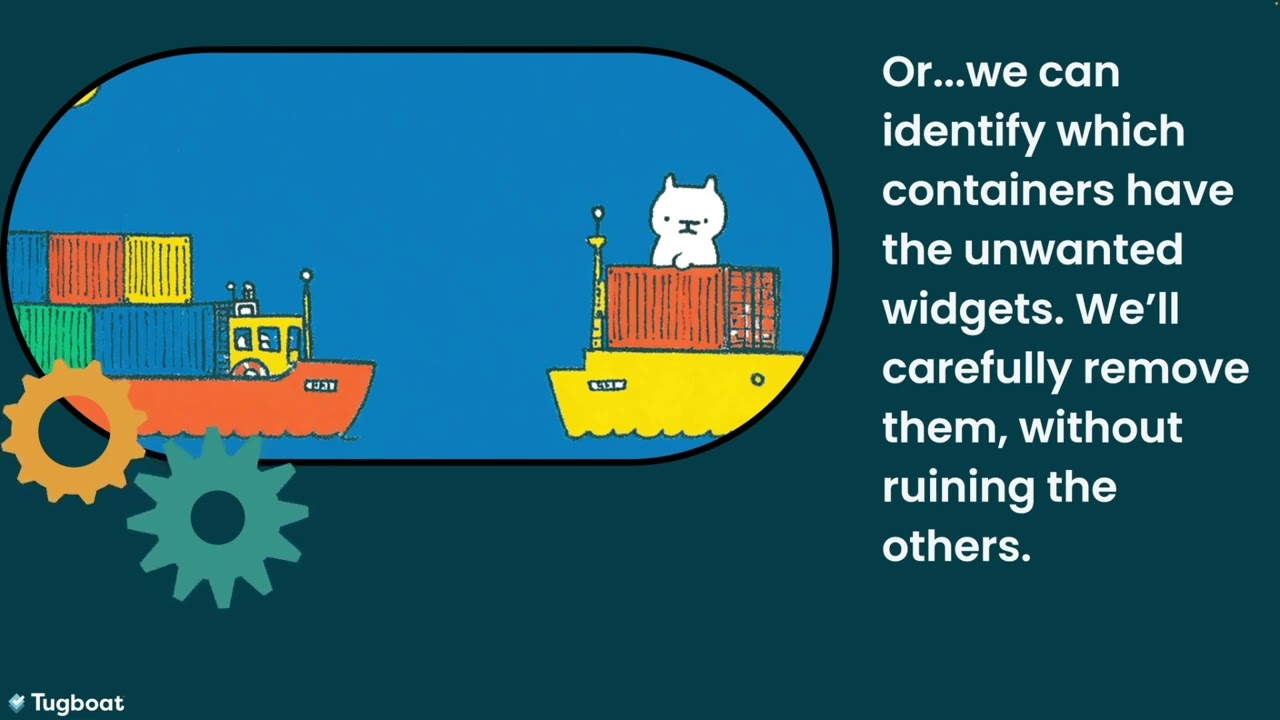
people. Governance will give you um clear decisions, repeatable workflows, and measurable standards. So, this sounds good, but how do we get it in place? Well, we're going to break down each chaos signal, starting with ROT. So, ROT, if if content doesn't help users complete a task, answer a question, or support a key business goal, it's rot. It's redundant. It's not needed. It's one of those things that
just don't belong there. Right? So, for example, you have instances of multiple pages or sections talking to the same content. Um in higher education it's quite common because there's so many sites. You got the main institutional site talking about an engineering program. You got the college of engineering also talking about the same program and you got the academic calendar the perspectus of like the university talking about
it. That's a challenge, right? FAQs is another great example. Now, I'm not talking about like the support knowledge based type ones where you have Q&A which is that's all it is but it's more like you know the simple sites where you might have more about us or contact us which is also the like or like shipping and politics or e-commerce sites those are somewhere else which means
that an FAQ is often a crutch right it's a catch all for all your content or someone says where you have the hippo effect and the highest paid person says I want FAQs right? It's usually a sign of your content failing or or your navigation failing. And so that's just something to be aware of. There are times where we make sense, but not always. Now, as far
as outdated content, it's pretty self-explanatory, right? You're talking about old content such as an old event page on your site. Uh maybe it's from 10 years ago. you know, when people leave your organization like leadership, you know, it's one thing to update the team page, but you know, there's dimensions of them probably elsewhere, especially like a president CEO and that's, you know, something you got to have
triggers for uh in your process. And then one of my favorites for at least in I built a couple internets for a couple companies and um they used to do like internal news postings of a new policy and explain the policy throughout. This is years ago. And then it of course where that policy actually lived got updated. So now you're in a search scenario and you see
both and you get the old news article and that's the policy. Well, >> no. So now it's like short snippets to then introduce them and direct them to the final policy. >> Actually that just made me think of this. Um in a session on Monday I was in the AI summit. I don't know how many of you might have been in the AI summit. Um, do you
recall one of the presenters was talking about a university that has a lawsuit against them? >> Do you remember that? >> Yeah. >> So, I haven't been able to find it yet, but I wanted to find it because I thought that was like it opened my mind. It opened my eyes, I should say. Um, a student was taking the university to court over an image, like an
infographic kind of an image, I think it was, that had stated something about like what the outcome would be if they graduated or like some kind of thing like that. And it was this outdated image that should have never been on the website. It should have been gone through this process process and maybe updated so that it was reflective. But I thought that was powerful that that
this student was going back in the wayback machine finding an image that said something about the program he took and then was taking the university to task because he didn't have that outcome. I got that close to right. >> Yes. And in the industry my company's in also that's increasingly a problem of media finding old >> articles about us you can't guarantee anything you can't ensure anything
so we have to scrub for all sorts of words now make sure it can't get held against you in the future so content governance and tightening up how many pages you have what you're saying it's a whole it's >> Is there anyone else just a show of hands I get a sense is there anybody else that would experience something similar where they're at where if they had
some older outdated content they could be held liable for that or they could be held Yeah. So just about everybody in the room not everybody but lots of hands went up. >> Okay, that's good to know. Thanks. I appreciate that. >> Yeah, thanks Richard. Appreciate that. Um so just couple other things just to give a good another example. Trivial pages. You got the come and see page.
You got the you know page under construction classic. Love it. Uh love it but don't love it. Uh, and of course you got shorter blog posts and my favorite one is when I was at the university, they're talking about the geese on campus. I live up in uh Manitoba, just north of North Dakota, and we have a lot of Canadian geese there in the spring and you
know, they told them to leave them alone. Like I don't know what students were going after these uh what we call cobra chickens basically geese, but obviously just leave them alone. But it's trivial. Sorry. >> Did you say cobra chickens? >> Yeah, cuz the geese And it hits that you >> Sorry. I've experienced it. You got to dodge them when you're biking too. >> Anyways, so >>
keep it or or else there's something going to happen. And a content audit and I'm sure many of you have been are familiar with this. I'm just quickly to go through this. The content audit is there to kind of help identify what you're dealing with and giving you the options at least functionally, not necessarily modules, but you know, does this content exist only here? Well, if no,
it's redundant and maybe you got to look at merging the content or or consolidating it somehow some way. Of course, everything's a little bit more complicated. Uh, you know, is the content still correct? You know, is anyone still using it? Are you looking at your analytics? Uh, if not, it's probably outdated and you need again update it or archive it or delete it. Whatever you can do
to just get rid of >> Yeah, that's ex I just want to interject for that because we were talking about this earlier. Um, how many of you have used Screaming Frog or are aware of Screaming Frog? Great. >> So, you can connect Google Analytics to that and then you can do a crawl for like 12 month period. It'll grab the Google Analytics data and you can see
page views and sessions and stuff and we did this with a client. They were a lawyer in Vancouver and we were in the initial session when we were revealing the talking about the we weren't revealing we were talking about the content audit what we were seeing and one of the stakeholders was the um founder of the the law firm and he had a real um attachment to
a couple of pages on the website and he felt that those were critical pages and we were able to do the shares show the spreadsheet scroll over and show data that 12 year in in the past 12 months there have been like 35 page views and he was intelligent and a smart man and he just dropped his ownership of those pages the way he had been feeling
about them because he was very convinced that they needed to be part of the information architecture he saw the data and he just went all right moving on and so that can be a really powerful way of doing that. data like data driven or data informed decisions huge right cut through all the not the politics right >> um so another question is there a clear task or
action tied to this content you know is it is there a CTA um and if not it's trivial and again got to rewrite it or just delete it so just quickly because this is more of this is not a technical session keeping it fresh in Drupal obviously there core modules already coming with Drupal. You got content moderation. You got workflows coming. You got contributed modules for scheduling
or foruler with scheduler where you get to uh schedule unpublishing of content after expiring. It's a little bit trickier to pull that off in reality, but you know, there's some use cases for that. Uh for example, well, not like collective bargaining or something like that. Eventually, those have to get expired. Uh and you want to hide that stuff. uh content moderation notifications again sending reminders uh to
to review the content that you have and then there's also those best practices you can build content dashboards in Drupal with views you know based on the updated dates you can say hey how many pages have not been updated in the past 12 months and then you have a dashboard for the users to see it right based on the ownership and of course there's other ways to
do it and we kind of you got to mix in all these type of practices um just to build up it's almost like features that you build up in your model. >> Yeah. So, we're going to talk about the chaos signals and hopefully break those down in a way that um you could leave the session today and start to maybe take a look a different look at
or a different approach to your content governance. Um one of the things though when you were talking about Drupal, I was um how many people were in the the keynote? Um, I found that was really exciting when we started this talk about uh the context control center. >> Um, that actually got me really excited. I mean, similar to probably other people here, there's a little bit of
like fear and uncertainty around this whole world of AI and then also excitement about what's happening in Drupal. That one really excited me. And then I was in an open Y um YMCA uh session just before this one and we were talking about how we could take Wise brand guidelines which is like 25 pages long or something feed that into the context uh control center and then
when an association is building up their own website they're going to be able to follow all those and I thought that's um another powerful opportunity. Um, okay. But back on track with unclear ownership. So, when there's no accountability, right, um, the content can turn into orphaned content and it it can become an orphaned content kind of a problem actually. Um, and unclear leadership, sorry, unclear ownership is
one of the the leading causes of decision paralysis, right? Because when you take away that straight line of authority, you get sort of a circular uncertainty. So, for example, you could have somebody um uh you could have a page that um was a timely or really critical or important kind of update, but nobody owns it, and so you stall out on making that update. Now, you might
miss that deadline. That could be detrimental in all kinds of ways. But another potential problem could be that someone else updates a page and they didn't have the authority to sign off on that risk that's associated with that, right? So you can you can find yourself in some hot water. We were talking a little bit about that actually um with you know content updates. Um yeah so
I'm going to give you sort of three things that you can you can look at. Um I'll give you an ask an action and an outcome and sort of what the win is for how you can address this unclear um unclear ownership. So perform a domain author, not a domain authority. I'm too much in the SEO mindset sometimes. Um, perform a domain inventory. So what you're trying
to do here is you're trying to map your site to specific content domain. So if you were higher ed, think about it from the perspective of of admissions, research, HR. Um, you'll get a spreadsheet at the end of this which is, you know, an explicit list of these URL paths belong to this department. Um, and then you can say which job title like who owns this? And
the win is that you can instantly identify any of that kind of orphaned content. And this circles back to um what CJ was talking about with the rot. And if there is no department that is um no domain authority or no owner of that, then maybe that's a piece that can be thrown out. Um it could be part of your first batch of your rot um cleanup.
So the next is thinking about and creating sort of these editorial taxonomies in Drupal that match those domains and then assign your users to those taxonomies. Um for example, you might have an HR editor and now they can only see and they can only edit the the content that's tagged careers. So, this will, you know, physically block them out of making a bit of a mistake and
updating something like the library's hours on a piece of content that they shouldn't have had access to. Um, and that just eliminates that accidental sabotage. Um, and I know that I've seen it multiple times on projects where people will talk about how content had been updated, they didn't update it, someone else did, and it caused a bit of a problem, right? Um, and then the third, um,
the the idea here is that you want to require content to have an owner. And you could do that in Drupal. You could put a field in each of the content types where you have to assign an owner to it. Um, and then, you know, you know, an editor can't save a page without selecting who's the domain or who's the owner of that. Um, and then you
could use an administrative dashboard or create a view that would give you high, you know, would highlight any of the pages that had passed their review date. Um, and this just helps you kind of form instead of being like firefighting, you're being more proactive um with your maintenance. And these these steps can just kind of help you graduate past that that level of where you've been setting
permissions on your website, which is a good step, but now it'll allow you to actually say, okay, you have been given charge of this neighborhood. And so now you're maintaining that neighborhood. And I'll just talk about as a real world example, we were working with Queens University Library, Eastern Canada. Um when when we did the initial discovery, we could identify right away that there was a even
even this the the people that were on the project on the client side and the stakeholders were telling us like content governance is an issue, but we could see it immediately and so we were able to say to the stakeholders like you you need to have a framework that's going to help you um maintain content updates and do it in kind of a timely way. Um, so
the story here kind of goes, they had really, really broad ownership. So, you know, almost everybody could edit anything on the website. Um, they had different departments within the library that were all using the same content types. And so, there was lots of stories of, you know, updates that were being made that people were saying that was, you know, that caused a problem on my content because
you updated these hours. And we started, we did the screaming frog crawl. We configured it with Google Analytics so that they could start to see some, you know, some data attached to their pages and understand that. And we just really went through that inventory of that entire um site and really helped like walked them through how they could categorize their content for this idea of, you know,
the the concept of domains. And an example of that I think that will help me to articulate this is that we looked at sort of that area of careers. Um and when we started to think about that then we could say okay so these are the content types that kind of fall under this you've got job postings and you've got staff directories you got benefit guides etc.
Um and then we could say okay so who's really responsible for all of this? And now the content domain was assigned to HR and we were able to say who on your team is what's the job title? We don't need the name of the person. what's the job title that should should take us on. Once we were able to do that, then we could really start to
identify some other things like roles and responsibilities and assign that. Um, and that seemed to help them get a much better handle on their content. The team that was responsible for managing and maintaining the website had always been feeling like it was out of their control. They just didn't have any say in it. And we through the project we we said here this is yours to manage
and we went to the stakeholders and said this is how you should be doing it and the stakeholders said okay great they had also been feeling like well what do we do with this who owns it we don't know and so nobody was really taking ownership of the whole like content governance aspect but we were able to say okay here's a structure that could work we've worked
with your teams we've mapped it out they're going to finish the rest of it right they got to go through on their side and figure out who else is uh going to be a domain and whatever job title should be. Um, but and in the end it gave them confidence and made them feel much better about man managing and maintaining this new Drupal experience that they just
paid a bunch of money to have designed and developed. >> Hope I didn't take too long for that story. Uh, we'll see. So, let's talk about bottlenecks. Uh, >> talking about bottlenecks right after. Yeah. So at a high level um you know getting content approved is straightforward until you factor in the back and forth edits the number of people uh involved in reviewing it and then the
number of approvals depending what level of the content it is like media releases have the same amount depend if you're a regulated industry. So you know we have you know email and word docs and getting those email approvals and those are common use cases and with the combination of creating the content within the CMS and having the appropriate roles and permissions for writers and editors you have
those core modules like workflow and content moderation which we mentioned and those are good to help manage the content today is whether or not you're in a decentralized or centralized content management model right now out of curiosity does how many people of human translators as part of to translate their websites. It's a couple, not many, a few. Okay. So, this is for you. Uh so, one of
our clients, uh it gets really complicated with translators, right? Uh and one of our clients, uh Menanite Central Committee, uh we implemented Deepel, a translation tool powered by AI. And actually, they're here. I haven't talked to them yet, but they're here. They have a booth. And we we integrated that as part of the translation workflow. And just a little context of MCC, a little shout out. They're
a nonprofit. They really focus on relief development and peace and do a lot of great work over with over 40 countries and reaching users in multiple languages is really important to them. Yeah. So MCC is more like a Red Cross or World Vision UNICEF type of organization. So they needed the requirement. They needed to translate pages into in French in this case uh by human translator. you
want to continue to use that makes sense. The direction we took was to integrate DBL into the actual authoring experience and I'll show you that right now. Now, it's not a live demo. It's a screenshot. So, bear with me. Uh, first you got the editor and translator selecting the actual content, selecting the language of choice of where it wants to go. So, the target language and then
putting in that request for the translation through Drupal. Then you get to quickly review the request before submitting it into deep and then the translation happens, right? It creates the pages, it creates the content, all the all the blocks and uh gives you a status update until it's ready for review. Click on ready for review. Oh, sorry, forgot there's a job cue. So if you want translators
want to look at things in a batch translation, you know, take an hour doing the work, they got that as well. So when the translator begins their review, they're able to review the original content on the left. that's the English and the translated content on the side on on the right. So we've got that side byside uh view that's more efficient way of of comparing and and
then also allows them to edit it make sure that they have their own uh jargon in there because there's different ways for different words obviously uh as you translate. So and then they just check mark it and accept it right and then they can publish it out and that happens all before publishing right. So those that just enhancement just from a translation standpoint is amazing, right? They
they get to translate it and make sure it's consistent to their translation standards and their lexong uh and and it's all prior to publishing and of course reduce time and effort uh and cost still respecting the languages in in in the region. That's probably one of the key things and I know it's getting better but you know there's there's second based type of language that is uh
key back to you Richard. So the last chaos signal um inconsistent messaging and I think this is one that is quite critical actually because this is where um your internal operational deficiencies or messiness can become public facing and this is where I thought of that university example where um you know they didn't they didn't have a consistent messaging and they didn't have their consistent process and it
caused a little bit of problem for them. It's almost like you can have um you can create identity crisis for your website if your messaging is kind of fragmented. and I think that's the one thing about um, the fragmented journey, and I know this might be a little bit more for marketers, but when a visitor arrives at your website, um, they could come through any multiple channels,
right? They may have come from AI, they may have come from just a Google search, they might have come from one of your um, emails. Um, but they must be able to understand like who you are, what it is that you do, and why you matter. And it has to happen in seconds. I think that sometimes I know this happens for me and I talk to a
lot of other people like my clients when I'm supporting them. I think we forget about that part. We all experience it in our day-to-day, but when we're managing websites, we're building websites or we're doing stuff, I think we kind of forget. we have to connect like that fast. Um, and it's really important and I think there's some common causes that can happen uh that can can lead
to this sort of fragmented um buyer journey. Siloed content production. Um, so we get different teams of different departments generating and creating content and they're publishing it and they're not telling anybody else about it and all of a sudden your um website starts to reflect your uh orc chart and um your ORC chart might be awesome but it's not going to mean anything and it's not going
to be the right way to communicate with your target audience, right? Um the the missing narrative northstar. Um, so you should have a single source of truth for your brand. And if there isn't, then the people that are creating content are eventually going to start to interpret um what that is from their point of view. Um, so you get, you know, before this we had this silo
content production. So you got these different teams that are creating content. Well, you can imagine now how those different teams will start to interpret what they think the brand should represent. And all of a sudden, you know, creators default to their own interpretation. Um, and you get this core message that starts to morph from page to page or section to section of your website. Um, and then
the disconnected handoff, and this happens between the channels. So, you got somebody that's discovered you on social media and there was a really good hook in your post and they get to the landing page and it's nothing like that. It's like they would have landed on a different page. And I see this quite often, especially when we engage when my team, my digital strategy team will engage
with clients um who need help with their Google Ads account and they'll say, you know, we haven't been really doing anything. We just do a little bit here and a little bit there. We really need you to look at it. maybe do an audit. One of the things we will commonly see is that there is this massive disconnect between what was written in the ad, the language,
the tone, the words that they were using, the hook, and the landing page that the person lands on. And you can see it if you just sort of look at it, you know, and then say, "Okay, so this is what I'm feeling when I leave the ad." And then I go to a landing page and it's like this wall of text or it's just this really bland,
boring product description. Um, so that's that's a a big problem, I think. And it's not that your buyer's journey needs to be more convincing. I think from everything I've been learning about AI for the last year and a half, I've been immersing myself and trying to understand this more and how it impacts digital strategy in my world. Um, clarity is one of those like if you did
that that sort of like that word graph, you know, where you get the words bigger. Clarity would be one of those big words. I think that's what people are looking for is clarity. >> Um, not not necessarily to be um more Um, yeah. So, think of inconsistent messagings as like in the buyer's journey, they're like speed bumps. So, you know, they're driving along and then they got
to put on the brake and slow down so they go over the speed bump in a in a comfortable way. Um, this happens quite often and what it does is it forces visitors to just exert a little bit more cognitive power and there are lots of great stories that um, sorry, great studies Norman uh, group if you're not familiar with them produces some really good studies about
cognitive dissonance and about the cognitive load on users on your website. Um, but um, you shouldn't, you know, you shouldn't have to wonder like when users arrive at your site, they shouldn't have to wonder about what words mean or what calls to action mean. They they should be, it should be crystal clear for them. So, what I'm going to do next is um, sort of take you
three steps that you can take to to evaluate or audit. And these are things that I think you could take away and you could implement um right away right after the conference. You don't have to necessarily be throwing things out. A lot of I was saying this in the AI summit on um Monday. A lot of your content is probably good. Like you probably have good content.
Not everybody's website's going to have content that's all garbage. You probably got some good stuff. So start working with the good stuff and see what you can do to optimize it there. Um, but really take a look at um is your content created with a specific target in mind? Does it have an objective? Um, or does it often feel kind of dull? So, the tactic is this.
Open your page and ask who is this for and what do I want them to do next? Um myself and our director of design Matt Pedifer at Imageex, we work with clients um and we do a lot of consulting and training around content strategy. And this is one of the mantras is what is the purpose of this page. If you can't define the purpose of the page,
it doesn't mean maybe that the page needs to be thrown out. It just means that you actually need to define what the purpose is. Um and that's really important. And the fix is that you know at the end of it you've got this page that you you see has some opportunity. Maybe it's about changing a little bit of the wording. Maybe it's about adding a call to
action. Um the second tactic um so so when your central narrative shifts so for example one of your pages is talking about narrative uh it's talking about innovations and then you move over to the next page in that sort of user's journey and you switch to talking about um reliability you can cause a little bit of a disconnection there for the user um and this makes it
it makes your brand maybe feel a little bit disorganized or disconnected. Um, and I think you know you could I I say here in the tactic to take your top three keywords. You maybe don't have that uh maybe it's a value statement or a value proposition that your brand has aligned around. You could use those but you should really take a look and see like does this
page reflect that? Can I see that within just a few seconds of analyzing that content? And it could be that it's just about updating some headlines or some subheads um or making a little bit of like you know a small linguistic kind of alignment in in how you're structuring the content on the page if that makes sense. And then the last Yeah. So when you don't have
that unified kind of a message, um especially when you're going from something like your educational blog, if we're talking about a um a university, you might have a blog page and then you move over to a program page. Or it could be that um if you're in commercial, you've got this educational blog that kind of helps inform people about your your um products or your services. and
then you move over to that product page. And if there isn't a unified message between that that path, that can be kind of jarring and it can actually lead to, you know, you risk kind of slowing the momentum down in that journey. That's that speed bump I was kind of talking about in the past. Um, but you just want to make sure that, you know, when you're
going from page to page that you're seeing this unified message. This stuff can be stuff that you could do with the existing content you're working with. It might not require a design. You might not need to have a new Drupal template created for it. So, you could do this stuff to your website now. And even if you were to do a little bit now, it's kind of
an iterative process. And then maybe the next time around when you're doing a development on your website, you're going to call that out and say, you know what, I discovered six months ago when I was doing this content audit that we really need to have this new content type and I've, you know, I've structured it with the fields I think should be there. Um, but in between
now and that next time that you might get to do that, don't let your content sit there. Um, and and be not optimized. And I think I'm hoping that these tactics would be things that you could go and and start to implement or look, you know, use to look at your So we're going to tie it back to Drupal again just quick quickly dive into the details
again but you know from a people perspective Richard work but work workbench access on the slides um there's extensive list of permissions to tie uh to roles you got the digital inventory accessibility audit and then from a process perspective again more modules workflow scheduling um and and of course training is probably one of the key tactics that you have to do to ensure that it's you're enabling
the people to do the work and to uphold the consistency and governance. And then from a content perspective, more modules, there's AI content audits. There's a lots of stuff you can do with dashboards as well. And again, that context uh content center from the Drupal AI initiative is exciting to see. Now, the probably one of the biggest questions now and we're going to wrap this up soon
is how do you make it stick, right? Well, and some of you might have listened to my other session. I'm a big product manager type. That's in my heart. So, if you manage governance like a product, >> what you're basic not a policy, what you're really doing, and this is from uh Lenny's podcast, and he does a product management uh podcast, and it's about shaping the strategy,
>> shipping features, and syncing the people. Those are the three key things you got to do as a product manager. And what that does, it'll lead you to whatever your north target was. In this case, it's sustainability, trying to make it stick. So, at a high level, what product management is in this in this context is um it takes multiple steps. It's kind of like there's a
bit of design thinking going on in this in this case where you're listening to the users, gathering their insights, listen to their stories of what they're saying. You might hear symptoms, but if you're a doctor, you hear all the symptoms, you asking why, why, why, why, why why the five W's. and you kind of drill through those symptoms to get to that root problem and that's the
problem you're trying to solve and there's probably multiple problems you got to solve. Um and then as you define as that's defined there's the northstar metric we got to measure I'll have another slide about that but basically you need something to guide your team guide your stakeholders get that buy in uh cut through the politics this is what we're going for and we've all agreed to that's
what you want to get to at that point and then of course build a road map you have to understand what you're going to do now next and later like you're not going to do everything right So that measurement aspect that northstar you know you want to look at the user value right whether the content is helpful. So you might look at uh you might have existing
surveys like brand surveys and you might have a question about your website and I used this at the university I worked at and it was all about like sentiment right is it positive sentiment negative sentiment and that's what I was measuring. It's year over year or over two years I can't remember. Um but use trying to find user value and measuring it. That's a good way. Now
there's probably other ways to do it. There's a lot of KPIs that you can use uh about uh the content quality as well, whether it's structured or usable and and also the operational discipline. That's probably one of the best ones where you're looking at the percentage of pages reviewed in the in this like freshness window like has how many p or you can look at it ne
negatively um how many pages haven't been reviewed in the past 12 months right so depending on your culture uh you can look for what you got to look for what the core values you're trying to find in that content governance now shipping it that's like being a project manager product owner you're You're pushing features out. You got ideas to solve problems. You're ideating it. You're testing it.
You're validating with users and stakeholders, however you want to do it. And then eventually leading into the implementation, right? Um and in the end, you really want these anything that you ship contributing to that north star again, right? If you start talking about prioritization, yeah, you got reach, you got uh can't remember now. pi the rice framework reach impact uh complexity and effort. So all those things
are factored into it but you also kind of factor in the strategy aspect too and that's that's probably one of the missing pieces in that framework is the strategy. If you do that that's good. So that's the easy ones strategy changing of course syncing the people is probably the hardest thing and I always follow the atcar uh model for change management because that's what this is things
are changing. Yes, people don't move forward uh with this. They launch a lead. I love content. They launch and lead content domains. That's what basically happens. And you can't sustain it. But it's because what's failing is you need to continue to collaborate with your stakeholders and get users involved. It's just like any a website project. It's just it's the same thing, right? You have to get them
to be aware of the problems and and sync them on that strategy and your vision for your model. You have to build them. Um so and when you have to connect with their personal desire, right? So what pain points do they have or their team has? And then they have to you know then they have some you know uh they have some skin in the game. Um,
of course there's the knowledge aspect, training, documentation, road maps. Um, deliver that. So there's that information out there. Uh, ability, sorry, that ability is about the training aspect. It's enabled them to do the process of what what you've documented. And of course, the reinforcement just is so important. And you could do that in multiple ways. It's more training, maybe it's more collaboration, maybe it's a community of
practice or an interest group uh to continue the conversation and if you continue to listen to them and have that feedback loop, put them part of the whole shipping, you know, sprint demos, you can include them in that. So that's part of just bringing them along the journey because this is this is something where you want to build a sustainable content governance model to stop this chaos,
right? But in the end, as the Navy Seals, they say like slow is smooth and smooth is fast. So if you can set up a governance model, yes, it's going to add layers. But if you get it right, it becomes much smoother eventually and you get really good at what you do. That smoothness turns into some fast processes and eventually it just lead to a happy place
where you'll have clearer ownership in roles, a smooth workflow. I can't imagine. Uh, and then of course the content will be more impactful and you'll have that consistent messaging that you're looking for. So, thank you everyone for your attention today. We appreciate your time and uh, and open for >> Yeah, I know we pushed it right to the max. We had a lot we wanted to say,
but we'll stick around for a couple minutes if anybody wants to ask questions. I was just wondering if you had any uh client examples, especially in higher ed uh who'd used workbench access to lock down certain areas of sites for groups of us. >> Yeah, I think Queens um Queens University Library is one >> that did that. Um yeah, I think that's the one that I can
say. >> Yeah, we can always connect too. Yeah, we can re get reach out to one of the architects and make sure that we can find some more information about that. Uh, if you do need the deck, you can always email us up there and we can hit you up with the deck sooner rather than later. Um, there's another question. >> Yeah, I was just going to
ask, have you guys talked to the gentleman who built the audit tool? It's in betaish right now, but the audit tool that's in the back end took like >> migration. Content migration >> session before this. >> Oh, fantastic. Yeah, they were talking about just putting instead of spreadsheets and spreadsheets to make decisions and track things and do this and then you got 10 and all that. Anyway,
just putting that kind of moderation in the back end. It's kind of a twofold of like all your annual audits, keep approve, update. there there's just some like >> there's so much potential because I was thinking about Monday's session with Beck um at the AI summit when she was talking about the tool that they had built to audit their site and it produced that report of saying
you know here's how many pages are using too much jargon >> is that yeah >> no different make it a contributed module but still not there yet >> but they it was similar >> similar to >> I love it to contribute to the community and make easier for them. >> That's what I'm saying. I was like, I'll do a beta. I'll give >> I'll tell you exactly
what love. Um, but that would just really help that in between there to help all of us like do all these things efficiently and silent instead of all these fragmented stuff. >> Lots of work to do still. >> Absolutely. >> Well, thank you everyone. >> Yeah, thank you. Appreciate you.