X-Road 8 “Spaceship”: From launch pad to data spaces with the help of the EDC
About this talk
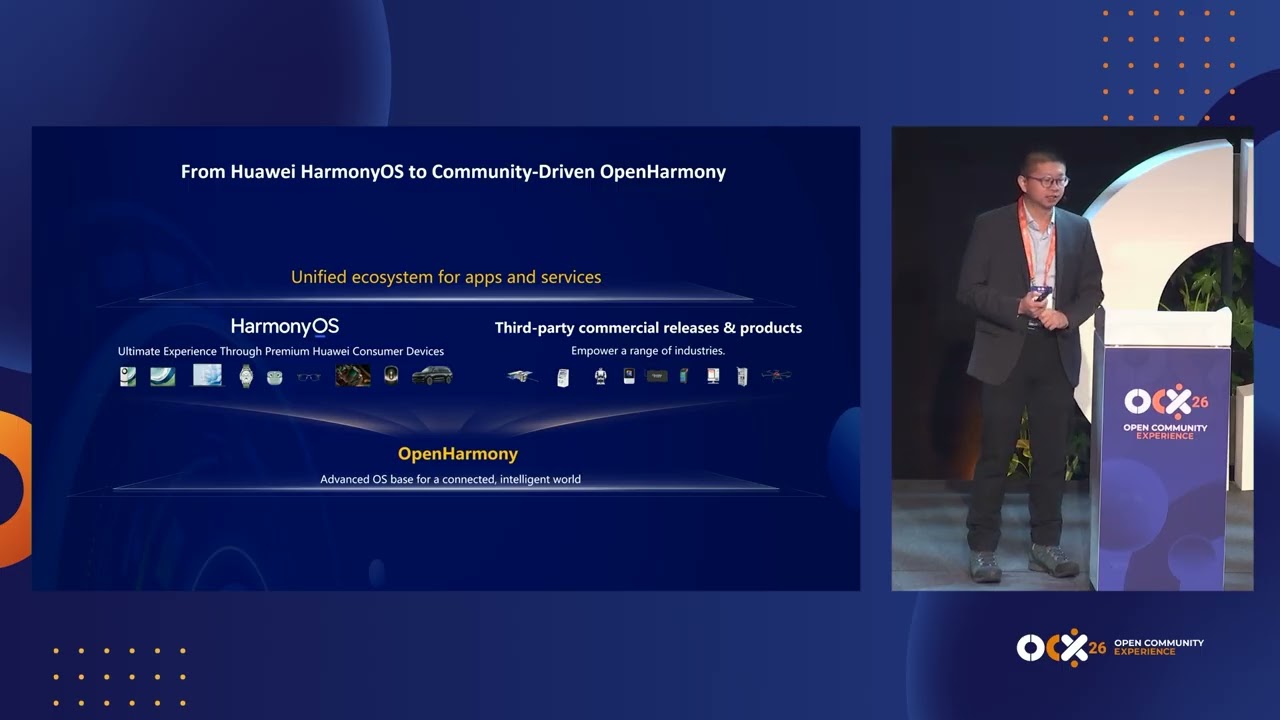
This talk covers the X-Road data exchange layer, presented by Petteri Kivimäki, CTO of the Nordic Institute for Interoperability Solutions. X-Road is a decentralized data exchange solution that facilitates secure data transfer between organizations, operating as a national data exchange solution deployed by public authorities. The speaker discusses the transition of X-Road into a data space solution, which involves replacing its custom protocol stack with standardized data space protocols for enhanced interoperability. The new version, X-Road 8, aims to retain its proven eco-system model while renewing the architecture for modularity and integration with the Gaia-X trust framework. This transformation is essential for organizations that need to connect to multiple data exchange ecosystems and will enhance the use of modern technologies within the framework.
Full transcript
[music] >> Good afternoon everyone. >> [clears throat] >> My name is Petteri Kivimäki. I'm the CTO of Nordic Institute for Interoperability Solutions, NIIS for short. Today I'm going to tell you about X-Road data exchange layer that that is an existing data exchange solution and how we are going to convert it into a data space solution. But first a couple of words about NIIS. So NIIS is a
non-profit association whose mission is to develop digital government solutions to its members. Currently we have eight members all in all and X-Road is is our main product. NIIS was originally established in 2017 by the governments of Estonia and Finland and since then slowly but surely we have acquired new members and we have also expanded our activities. When it comes to data spaces, originally we started to look
into data spaces about 60 years ago in 2020 as a new interesting data exchange concept and since then we have joined in several data space related activities and organizations, Gaia-X, International Data Spaces Association and the Eclipse Data Space Working Group by the Eclipse Foundation to mention a few. But then let's dive more deeply into X-Road. So X-Road is a decentralized data exchange solution that provides secure and
unified way to exchange data between organizations. It's an open source solution released under the MIT open source license. Uh, X-Road is uh, one of the most deployed, uh uh, digital public infrastructure components, uh, worldwide and a digital public good verified by the digital public goods alliance. Uh, X-Road is not a new solution. Uh, the first version was released already in 2001 in Estonia. However, back then it
wasn't an open source solution yet. Uh, the source code was released under the MIT license in 2015 and since then, uh, the use of X-Road has really exploded. So, today we have all in all 29 X-Road ecosystems around the world and there are almost 600 million people living in the countries where X-Road is being used. And when we look at the world map, uh, we have X-Road
ecosystems all around the world. So, you can truly say that X-Road is is a global solution. Typically, uh, data exchange ecosystems and data spaces, they are business domain specific. For example, health care, transportation, finance and so on. X-Road is a little bit different since typically X-Road is deployed on a national level. Uh, so, uh, typically, uh, public authority like the digital agency of a country deploys X-Road
as a national data exchange solution that is available to all the different kind of organizations within a country. So, even if the ecosystem is owned by the public sector, it's, uh, all all the different kind of organizations can join and use it. And, uh, X-Road is fully data type and semantic agnostic. So, you can exchange any data over it, whether it be XML, JSON, uh, encrypted, non-encrypted,
and and so on. Uh but regardless of X-Road typically being deployed on a national level, there is technically no reason why it couldn't be deployed on a business uh specific uh deployment as well. So, it's really flexible when it comes to different kind of deployment types. So, today X-Road [clears throat] provides interoperability within one X-Road ecosystem and between two different X-Road ecosystems. Uh however, the challenge is
that uh today organizations typically they need uh be members of many different data exchange ecosystems. So, it's not enough to be a member of one, but usually they need to belong to many. And it's problematic uh if they need to deploy multiple pieces of infrastructure for these different uh ecosystems. So, uh in order to make X-Road more interoperable with other data exchange uh we are going to
transform X-Road into a data space solution. In practice, it means that we are going to replace X-Road's custom protocol stack with standard data space protocols. And thanks to this change, X-Road becomes ecosystems and data exchange technologies that are using the same protocol stack, uh increasing X-Road uh X-Road's interoperable significantly. Organizations that are using X-Road can use the same technical components to exchange data with many different uh
data exchange infrastructures and and data spaces. So, overall uh the new X-Road 8 spaceship vision is to Of course, X-Road has a long history, a lot of legacy in a good sense behind it. So, we want to keep all the good that it has and get rid of the bad and the ugly. Meaning that we want to keep the proven ecosystem model and and security while renew
the architecture, make it more uh modular and using modern technologies. providing support for the data space protocol stack plays plays a huge role in that. Besides that, we also implement other changes and we want to be technically interoperable with the Gaia-X trust framework. When I say data space protocol stack, this is roughly what I mean. So, basically, the protocol stack consists of three layers: trust plane, control
plane, and data plane. When it comes to interoperability, the idea is that trust plane and control plane, they are standardized, meaning that different data space initiatives use same standards and specifications that provide interoperability between them. In X-Road's case, on the trust plane level, we are going to support decentralized claims protocol. And on the control plane level, the data space Instead, the data plane level is usually data
space specific. And this is the case also with X-Road. So, on that layer, we have the X-Road message transport protocol that provides digital signatures, time stamping, and and logging of all the messages. And the X-Road data plane level will be connected to the control plane level using the data plane signaling protocol. And this is very important improvement compared to the current model because this makes the implementation
more modular and enables us to implement new alternative data planes later without affecting the overall architecture. Right now, all these layers, they are kind of coupled together, which makes expanding any detail basically very very complicated. But with this approach, the entire implementation will be a lot more modular and it's easier to add support for new data planes. When it comes to the timeline, we started the implementation
in 2024 with a proof-of-concept project. And by the end of this year, we should have the first production version available. It may sound like a long time, and well, new data spaces have been kicked off faster, but our main challenge is backwards compatibility because of the big number of the existing X-Road ecosystems, we cannot make changes that are not backwards compatible. Therefore, everything that we do, we
we must make it in a way that enables our existing users to migrate to the new version without breaking anything. Then a few words about the Eclipse Data Space Working Group and why we consider it being important to be a member. So, NIIS is a strategic member of the working group and the key protocols that we are going to use are under the purview of the working
group and instead of just using the protocols, we also want to take part in the decision-making when they are being developed and of course contribute to the work. And when it comes to implementing the protocols, we definitely don't want to write the protocol implementations by ourselves, but we rather use existing open source components. And in this case, the key components that we are coming from the eclipse
data space components EDC open source project. And also in that case, we don't want to be only user of the components, but also participate in in the steering and hopefully also contribute to the development in the future. So all in all, we consider it very important to be part of this group. It gives us access to the latest information, gives better opportunities to network with other data
space initiatives and and also of key of course gives us the possibility to participate in decision-making and have an impact on the direction where these projects are going. Yeah, that's all that I wanted to share with you today. So thank you for listening. >> [music]