
Lightning Talks – Working at the Speed of Change Safety, Trust, and Adaptation
About this talk
This series of lightning talks focuses on the dynamic nature of leadership amidst rapid change, emphasizing the importance of psychological safety and trust within teams. Jenny Martin discusses the balance between urgency and the human aspects of leadership, introducing the concept of 'cultural debt' alongside 'technical debt'. She advocates for kindness in leadership as a core principle, highlighting how true kindness fosters trust and engagement. Matthew Bell Ringer presents on navigating uncertainty, particularly regarding AI adoption, emphasizing the value of diverse perspectives in decision-making. He introduces the idea of creating a 'safe enough' environment where team members can express themselves without fear. Finally, Carrie Newton Sargon delves into the neurological responses to change, explaining how emotional reactions can impact decision-making and productivity in a fast-paced environment.
Full transcript
All right, we are moving into our lightning talks. So, these are fantastic. Really quick, three back-to-back talks with three leaders. Um, we're going to be diving into working at the speed of change, safety, trust, and adaptation. So, 10 minutes talks and then we'll have a group Q&A here. So our leaders are going to talk about what it looks like to keep people connected psychologically safe when everything
keeps shifting. Also importantly, how do we keep our teams motivated when the goalposts sometimes keep moving as well. So a warm welcome to our first um lightning talk presenter, Jenny Martin, collaboration coach at Collaborate Solutions. Jenny, welcome. Thank you. See if I need my glasses. Um, okay. Yes. So, uh, this is all about working at the speed of change and the kind of leadership tensions that you
you're probably facing. We've talked about a lot of them today already. One of them that you'll be acutely aware of is this constant balance between pace and the underlying architecture of your systems and the scalability. Um technical debt something that we talk about all the time. What about cultural debt? Um what about cultural debt? So what about this same tension between pace and caring for the humans
around you? Um, do any of you any of you claim or or acknowledge ever saying um just this we just need to get through this release. Yeah. Just this this next quarter um and and but the problem is that this speed of change is constant. It's constant. And so as we fall into those leadership patterns perhaps of being a bit more directive or being motivating and kind
of more extrinsic way taking those leadership con um shortcuts what might be happening underneath is the slow erosion of trust and psychological safety on our teams. And so I'm talking about the case for kindness. The case for kindness. Kindness first uh always even when under pressure. How do you feel about kindness as leaders? Because it's got kind of a bad press. I could talk for a long
time about the history, the stigma, the feminization of kindness since since um the Greek philosophers, since Plato. Um can you be kind and strong? Can you be kind and still make the tough decisions? I think one of the problems that we have with this stigma of kindness is that we get it confused with niceness. And if we look at the history of the word nice um that
literally comes from the Latin nesus, not knowing, ignorant. And then moving into old French, uh, careless, clumsy, weak, feebly, weak, and feminine. Yeah, nice. Um, so what's the difference between nice and kind? Well, luckily, I just did a postgrad on the psychology of kindness and well-being at work. So, I'm the right person to ask that question. If you want to geek out about kindness and all of
the science behind it, please come and find me. But the latest research talks about these different scales of kindness, these different kind of axes. One um which is whether the kindness comes from um something that is socially prescribed or something that is proactive. The other um axis is to do with whether or not it's kind of thought-based, learned, or whether it's something that comes from your emotions.
And the kind of top left one is nice. Yeah. Opening the door. Um the bottom left one, oh, part of my community, I'll go and pick up litter. The top right one is, oh, you're sad. I should probably comfort you. And it's the bottom right where the true kindness is. And this is normally at some kind of expense to you. Your time, your money, your ego, your
pride. And this anthropilia in the middle is the heart of that that kindness. And that's um the opposite of psychopathy. And so when I talk about kindness, I'm talking about this this bottom right and this core of kindness. And this is hard. Being truly kind is not easy. It's fighting the hard battle. It's standing up uh for the right thing. Um often the feebly feminine ones doing
that. Uh in my experience, of course, I use that in quotes. Um, kind is not to be soft or gullible, but to be fair and consistent and trustworthy. So, being a kind leader is not being a soft leader. I'm going to talk about Bnee Brown. Um, please read her book um which is Dare to Lead and she talks about a different aspect of kindness and niceness. Clear
is kind, unclear is unkind. What do we mean by that? And that's where the nicities, the niceness uh means that we avoid that confrontation. We avoid the difficult message. We avoid the challenging feedback. Um we feed people halves truth halftruths. We talk behind their back or my favorite from her book, the dirty yes. So you say yes in somebody's face. Oh yes, thank you Karen. That's great.
We'll take that up. and then know behind their back, we're not doing that. And this creates psychological hazards and and politics in the workplace which which really affects people. And so another thing Bnee Brown does in this book, she asked 150 global seale leaders, what about the way people lead today needs to change in order for leaders to be successful in a rapidly changing environment? And the
answer overwhelmingly was courage. We need our leaders to be brave, to have courage. And she explores this lovely interchange between courage and vulnerability. You can't have one without the other. So this idea of leave your emotions at the door is totally outdated. As is this the carrot and stick, right? See what I did there? The carrot and the stick. It doesn't work. the e in exttrinsic motivation
as long as you're safe and things are fair. Um exttrinsic rewards do not work. They actually undermine the workplace because people will go for the carrot uh by any means. It doesn't work. Um what we need when we're leading teams is to meet our team's basic human needs. And this research has been stable for years and years and years. autonomy. We need to give our teams the
context, the background, the problems to solve rather than the solutions to fix and then step out of their way. We need to give them uh a sense of competence, their development, their learning opportunities, that they're leading um into their strengths, that they're doing things they're good at and that they enjoy and that they're being um appreciated for it. Relatedness, really important, belonging, feeling included, relationships, things like
criticism and competition erode relatedness. And the problem is with when our basic needs aren't met, it actually evokes a fear response in us, which leads to burnout. So, it's not necessarily lots of work and things like that that lead to burnout. It's a constant environment where our basic human needs are not being met. And so there's overwhelming evidence that uh addressing these human needs is good for
business. Right? We know from Google's famous research on psychological safety that the the that's the single most um important attribute of a of a performing team. Uh another thing likable. How do you feel about being likable as a leader? Or don't get too close to your team. Keep keep that separation. It's really important. In fact, um research looking at 50,000 CTO's looking at their effectiveness and their
likability revealed a very strong link between the two. In fact, leaders that are low on likability and high on performance are extremely rare. Less than one in 2,000. So, here's the call to action. This is this is what Bnee Brown says. Again, I'm I'm relying on her a lot today. Um, leaders, she says, should be self enough self-aware enough to lead from their hearts rather than unevolved
leaders who lead from hurt and fear. So, how evolved are you? How evolved are you? Um, so it's time to evolve. It's time to lead with kindness even under that pressure because that's the norm. Um, kindness, understanding, empathy, creating cultures that foster well-being, not the sticky plasters, the pizza and the beer, the duvet days. Those are superficial interventions and they're not sustainable. So we need to be
looking at managing your cultural debt through keeping a really close eye on those human needs. If you want to talk about what how to go about that, of course, come and come and talk to us. Um, so just leave you with this what final quote. In the past, you know, we need to be human, right? Be as human as we can be. In the past, jobs were
about muscles. Um, now they're about brains, but in the future, they'll be about the heart. Thank you. That's me. Right. Thank you, Jenny. We are going to have time for a Q&A with Jenny and the rest of our group uh right at the end of the session, but please welcome Matthew Bell Ringer, neurodeiversity and innovation specialist at Meeting Bin. Matthew, welcome to the stage. >> Hello. Thank
you very much. >> Right. So, a lot of lightning talks happening. You don't need Yeah. Um, so yeah, I'd like to invite you to imagine a scenario that I don't think will be terribly difficult for you. You find yourself being asked to roll out a new AI backed feature or an AI AI backed tool. When you look, there's hardly any documentation for what's behind it. There's a
there's a holes in the privacy policy that you could drive a bus through and your technical teams are still struggling to roll out the last thing. What do you do? In today's lightning talk, I'm going to be talking about safe enough for uncertainty. I'm going to be explaining why there's some degree of uncertainty that we just can't escape. I'm going to be talking about how diversity of
perspective can help you navigate that uncertainty. And I'm going to be talking about how safe enough is the way that you can get access to that diversity of perspective. So, I'm Matthew Bellinger. I'm a neurodiversity and innovation specialist. I'm also um chair of neurodeiverse IT within BCS, the Chartered Institute of IT. And before I started my own business, I was head of platform development at the University
of Sussex. So, the situation that we find ourselves in is that there's so much rapid change in the environment. The tools that we're using are changing all the time. You know, few years ago, we were shifting to the cloud. Then we were shifting to remote working during COVID. Now we're building AI into everything and there's so much business pressure necessarily to be able to keep up with
this. But the problem is adding all of these new features adds more complexity to the system, more interdependence, and the effect of this can be dramatic. You there's a pretty good example of this with Amazon's East US1 outage in autumn last year that was caused by a really small change. There was just two little automated processes and a tiny little DNS update that led to a dayong
outage for a big chunk of internet infrastructure and the loss of millions of dollars for Amazon and their customers. Maybe some of you as well. And aside from showing that it's always DNS, um what this shows is that we're kind of stuck acting between the world as if it's simple and predictable and manageable and taking actions that then backfire or really being able to work actually being
able to do anything at all and being able to act in the world effectively. We can't we can no longer really wait to be certain in order to take action. And to start breaking down this deadlock, what we can do is approach the problem as a complex one. It means that we we're accepting that there's a fundamental uncertainty in the actions in the situation that we need
to be able to act upon. Now complex difference complex problems are different from complicated ones. With a complicated problem might have a lot of steps but if you do the same thing you get the same result. With a complex problem complex situation you can do the same thing a 100 times and get the same result and on the 101st you get something completely different. By definition, a
complex situation is one where we can't fully predict the outcomes of our actions. So what we need to do is understand as much about the problem space that we're working in and to be able to make good forecasts and really to make better decisions on the basis of those. And we can do this by getting access to as many perspectives as we possibly can to increase our
chances of success. Now a key way to do that is to to navigate this uncertainty is to take advantage of the diversity in your organizations. There's an awful lot of evidence that the key way diversity supports the business is by enabling innovation and resilience. There was a recent article by Warrick Business School that suggested that a lot of this was down to the value of varied psychological
frames, different ways of understanding the world, different perspectives, being able to engage with a wider range of problems. And this makes sense when we think about things as an ecosystem from a systems approach. It's not that one perspective is particularly great, is better than the rest. It's about the richness of the available perspectives and the ability for them to communicate effectively with each other. And interestingly enough,
you know, supporting these networks of ideas is one of the core functions of technology and in in in business. And it's not to say that this is this is easy. You know, diversity is very useful for navigating uncertainty, but it can also be a source of conflict and difficulty. And one of the most effective ways that you can do you can get started at least with this
is to start with what is certain what is known and what is agreed upon. Now if we start from there we can get access to what diverse perspectives offer us. They give us the ability to see problems from different angles. From one perspective perhaps the conventional perspective a problem can seem completely impossible. It's not something we can do anything about, but seeing it from a different perspective,
maybe it's addressable. There's there's a way we can effectively engage with it. It's also the case that different perspectives can see different things change at different times. Different people are sensitive to different aspects of the environment. When those when people sense this, that means that the organization can respond quicker to these weak signals of change. And when the effect of change is nonlinear, it means that you
can save an awful lot of effort and resources by acting quicker. It's also the case that if you're delivering a product or delivering a range of products to a diverse user base, it's much much easier to do it if lived experience is represented in the teams doing that delivery. So it's not really enough to have diversity in the organization. People are only really going to contribute if
their perspectives are going to be listened to and if they feel safe enough to share them. You know, sharing your view at work is a risk. You know, what if you're wrong? What if you're right, but people don't listen to you? What if you upset someone? Important. You need to be able to get access to these perspectives. And I suggest using this idea of safe enough. You
may have attended sessions where someone started by saying this is a safe space and then it turned out to be anything but you know but actually we can't really have fully safe spaces at work very often meaningful work is consequential you know what we decide has effects in the real world otherwise it's fasile and there's no point in having the conversation and it's also true that different
people have different risk risk profiles. People across different functions of the organization and also people with different backgrounds and different identities and many situations that are safe for one kind of person can be unsafe for another. And it's very often the unconventional voices that actually you need the most who are the least safe. So the goal is to create a situation that is safe enough for everyone
involved. Now, safe doesn't necessarily mean comfortable. The idea that everyone should encounter some degree, a manageable degree of challenge is actually what we're going for here. And it's also worth understanding that that challenge might be different for different people. And you can start to work with this by looking at different dimensions of safety. Thinking about what it is people are being asked to do, what it is
they're being asked to share, what they what they will experience in the moment, and what they might experience as a consequence afterwards. It's really about creating a boundary for that uncertainty that I spoke about before. So we're limiting the possibility and the risk. So people are free to explore and experiment and maybe even make mistakes. So there's some uncertainty we simply can't do away with. It's it's
just the nature of the situation and particularly when there's a need to move fast and that makes change risky. The more perspectives you have on the situation, the greater the chances of identifying issues early on and being able to respond to them effectively. By ensuring that everyone is safe enough to share their insights so that they've it will give you the access to the greatest breadth of
knowledge to understand everything that's going on. Take safe enough steps to explore that uncertainty that remains. So the next time that you feel stuck between the need for change and the unknown consequences that will come about, think how can we make this safe enough? Thank you. Thank you, Matthew. Next up, we have Carrie Newton Sargon, systemic behavioral coach at Thirsty Horse Consulting, joining us for our last
round of our lightning talks. Welcome, Carrie. >> Thank you. >> Um, hi everybody. Uh, so I'm Carrie, uh, and I'm a tea addict. Um I also uh work with senior technical leadership um for my sins and I deal mostly in teams that are going through some sort of conflict, stress or burnout. And today I am here to talk to you about brains, specifically your brains on change.
Um, and this is important because nothing has gathered quite as much momentum as the race to create, to adopt, to adapt to using AI. Um, and I think we can all agree um that it has gone really smoothly. Like the process is going really well. Um, and what's interesting is that even positive changes as it turns out um has an impact and gives us um a mental
response. We find our brains screaming at ourselves, screaming at us, this is stupid. Stick with what's safe. Stick with what's what you know. Um why is that though? Um well, it turns out that any change has a cost. It takes quite a lot of energy, the cognitive processing of that cost. Um and our brains don't really like that. Um, and so our brain will kick off a
series of responses um that are um well, you can think of them as little alarms. Um, they're intended to keep us safe. Um, essentially your brain is working through a process of being as lazy as possible without dying. The problem is that AI is not the only threat or change that we're all facing right now. Um we are in the midst of a period of um you
know global geop geopolitics of um threats or changes in the economy. The cl the climate is a constant risk and of course we've also got the relentless pace of delivery. Um and all of these things together they compound the risk they compound the threat. They compound the potential energy that our brain has to go through. Um, and if you are a creature with a brain, arguably some
of us are not. Um, but if you are a creature with a brain, you will have some sort of emotional response to these situations whether you want to or not. Um, so let's look at what happens. I've got a really handy model. Would you like a handy model of your brain that you can take away with you? Yes, of course you would. Um, so a really handy
model from Dr. Dan Seagull. And the first phase of this model um is you in a calm state. Say, you can do this yourself. You take your hand, you put your thumb across your palm, and you close your fingers down across the top. Excellent. So, this is you in a calm state. Everything's okay. Um, your trains are on time. You had your Weabix this morning, and as
yet there's been no reply to that email that you sent. Um, okay. So, you've got your model of your brain. Uh, this here is your prefrontal cortex. That's the part of your brain that is largely connected with your u your rational thought, your creativity, your problem solving, your ability to make decisions. Um on your thumb knuckle here, uh there's actually two. There should be two, but you
know, I've only got one thumb on my hand. Um this is real life, not AI. Um so on your thumb knuckle here, this represents your amygdala. Um and this is essentially the part of your brain that kicks off your fight, flight, freeze, and fawn response. You can think of it as a sort of a risk tracker. Um, but winter is coming, right? Inevitably something's going to go
wrong. By the way, sorry, my friend Nick is going to do a lot of heavy lifting today. Um, enjoy. Um, so inevitably something goes wrong and this leaves us in what do Dr. Dan Seagull calls a flipped lid state. So you go from here to here. Um, and what you'll notice about this is that your prefrontal cortex, that area responsible for your rational thought, your problem solving,
your creativity, that was connected and now it's not. Now, obviously, this is metaphorical, but what it represents is essentially oxygenation. How much energy is going to that part of your brain? When you're in that flipped lid state, you're getting less energy in the bit of the brain that you rely on largely for being creative, for solving problems, for being rational, and for making good decisions. And all
of this gets diverted in order for us to respond with fight, flight, freeze, or fawn. And what's interesting is that we have the same response whether the threat that we're experiencing in the moment is big or small. Regardless of the size, um we have the same response. Um, and this is primal, not primitive. Um, this response is actually in every single living creature all the way down
to the really simple um bacteria. They um have a towards and away from response as do we all. Um, so this response, it's not only to physical threats though. We find ourselves moving into this flipped lid state when we have social threats, when we have emotional threats as well. So when we experience things um like threats to our status, threats to our certainty. So status is like
how good of a whatever I think I am, how good of a parent, how good of a friend, how good of a CTO, how good of a developer. Um threats to certainty, so how much I'm able to predict the future or how how predictable the future seems. Threats to autonomy, how much control I have over what happens to me. threats to relatedness, my relationships, my ability to
connect or my inclusion in a group whose inclusion I care about and fairness um threats to fairness. So, if you've ever um been at a table with a group of friends and there's a waiter going around pouring drinks, uh there's a fascinating study that was done showing that we can detect a millimeter difference in uh in how much drink is poured. So if the waiter paws slightly
less in your glass and you're like rude. Uh that is that sense of that threat to your sense of fairness kicking off. Um okay well the next slide is uh is screwed. So we'll just leave that one. Um so we like to think that we are um professional rational um people. We like to think that uh we retain control. Um but actually it turns out that if
we're not paying attention to our needs in these spaces, we actually can trigger that flipped response. Okay, so all humans respond and as we can see here, there is actually a really clear business benefit to us all remaining calm in the moment and some significant threats and detriments to us businesswide when we are in that flip lid state. Um but in order for us to have business
impact yeah uh we have to design the route by which that impact can occur. Thank you Nick. He's really subtle. Um now I don't have time of course in this talk to cover all of the different things that we can do. So I'm just going to focus on two things for you today. The first um there are two things that you can start with if you like.
So, we're going to look at briefly at metacognition and signals. Um, and I really like this quote from Curtsban. Um, and it's a lot of words on a slide and we don't have a lot of time today. So, let me summarize it for you or pull out the key point which is that feeling good about something doesn't necessarily lead to a good decision. Um, and I think
what it's really important for us to understand is that actually discomfort and uncertainty are side effects of being alive. Um so what we really have then is a framing error. Um and if we nudge our perception, we actually can start to see that that discomfort as data. It's information that we can use to decide and to design how we go uh how we go forwards. So we
can do fairly simple things like ask how am I feeling? Um how are my people feeling? How do I know what is giving that away? We can also look at things like the scarf model um status, certainty, um autonomy, relatedness, and fairness. And we can ask ourselves, what's missing? What's missing for me? What's missing for my people? Um and if we're not entirely sure uh like when
to start asking these questions, it can be difficult to think of it in the moment. We can look to our own physical responses in the moment as a trigger for that question needing to be asked. So, am I feeling particularly hot? Is my heart pounding? Do I feel sick? Um, and so from there, we can start to incorporate some of the things that Jenny was speaking about
earlier. So, we can start um making uh making a case for kindness, bringing in this element of kind. And that helps us to uh to respond to this need for um status, for relatedness, for fairness. And in terms of what Matthew was talking about, making spaces safe enough, this is what helps us give people slightly more sense of certainty and of autonomy. We can also ask a
question that I think is crucial uh when we are in this space and trying to make these changes, which is what do you need to meet my need? And if we're asking that of the different people that we're working with at each step along the way, what do you need to meet my need? This is where we're starting to address those gaps. Um, so we need to
understand as well that that flipped lid state is pretty inevitable. It's going to happen. Like I say, it can happen from the tiniest triggers. Um, so it's actually um normal. So instead of um uh just ignoring it, we want to aim more for calm. So the second thing that I want to cover um uh which I won't take too long over, but it's our choices, the messages
that we send. We want to keep people in this calm state rather than this flip state. And so we want to think about when we say things or do things, how do people interpret those things? Um when we are using a particular tone of voice, the words that we choose, the decisions that we make, who we communicate with, and what we choose to say. And the message
that we send to people when we're communicating with them will keep them either in that calm state or move them into that flipped lid state. Um, and these are responses that everyone has, but we can make these changes so that the spaces that we're creating are good enough. Um, and if we're not sure if we're getting it wrong, we can ask. I think it was picked up
in the uh the um keynote this morning. Um, if we're not sure about how we are coming across, we can ask the people around us or you can actually just run it through an AI model and see what it gives you back in terms of uh critical appraisal. Um, we can also briefly assess how that went and decide on one small thing that we can change for
the next conversation. And if you're experiencing any resistance as I'm saying these things to you, um, I want you to keep in mind that this is your brain being as lazy as possible without dying. Um, and to remember that this data, uh, this discomfort is still just data. Um so as we're going through and experiencing whatever we experience we can and saying whatever we saying we're saying
we can ask these questions so that we understand more about the impact that we're having in the moment. Now there's no one approach um so we can observe what people are needing in the moment and respond to what we notice missing. Um and then as a result of that we can decide on the best route that we can take forwards. Remembering always that our role in positions
of leadership is simply deciding um what's best for this context. What's the best response for this context? So this my friends is a start for us to work out how on earth we can deal with the unbearable weight of constant change um in the face of the future that we're all moving towards. Um, and of course this is, you know, only a couple of steps that you
can take. Um, but if you do find yourselves in a pickle, um, on this, uh, QR code, you can find a summary of the talks. Um, and, uh, in the meantime as well, Jenny and Matthew and I will all be downstairs. Um, or you'll find me in the TQ ready to answer any further questions. Thank you, >> Carrie. Thank you. Uh, I don't think Nicholas Cage had
any idea he was going to be part of CTO Craft this year, but we're glad to welcome him. Um, if Matthew and Jenny, if you don't mind joining um, Carrie on stage real quick. Uh, we've got some time to answer some questions. A big round of applause for our lightning talk uh, speakers today. So, um, we're going to I'm not sure if we've got Slido going or
we may just take a show of hands here if anyone has specific questions. But all right, we do have Slido going. So Bastion asking, "How can we encourage others to change towards being kinder?" towards being kinder? Um Jenny. >> Yeah. Um so I think one one of the things that that I find foundational to all of the sorts of improvements that you might make is about self-awareness.
a lot of what Perry was talking about, not just for leaders, but for everybody to understand how they're wired, um what what happens when their wonderful strengths are a little bit over the top when you're under stress, so that you can actually start to find um language that you can be a bit more authentic and talk a bit more bravely to each other about what's actually going
on. Um, and so yeah, that's that's how I would start is by understanding a bit about ourselves, what we're good at, what we're like on a bad day, and um, having that be a whole team thing so that you start to pave the way for more authentic conversations. Um, yeah. Got a couple more questions up on the board. Um, what's the most common trigger you see in
engineering leaders when AI change is introduced? and what actually helps them regulate. Matthew Kerry, >> sure. Um, so I think one of the big questions that's uh that's being asked right now is is AI going to take my job? Um, so you know, certainly when we're introducing AI into teams, that's one of the big questions. Um, and of course there's then going to be some resistance. Um,
but actually one of the things that I think we're missing is that AI is another tool like any other tool that's been introduced over the over the years. Um, and when we start to see it as the opening of a new branch of possibilities rather than as a threat that's closing down what's possible, um, it actually can be seen as a significantly less threatening uh, route forwards.
Um, I think one of the difficulties is that because we don't know what those roots are yet, it's really hard to not feel threatened. Um, but wherever possible, by giving people that space, by um, if I mean, I don't know the position of the person asking this question, but if you're in a position to offer that reassurance that actually this is a space and an opportunity for
exploration, um, I've got your back. You're okay in this situation, and your role here is to explore and to see what is possible. um that can help them certainly to take that step back for themselves to not feel that threat. So, we're working on um a little bit of status. So, you're still a good a good leader. Um some relatedness, I've got your back and a little
bit of certainty. So, there is a path forwards for you. >> Yeah, Matthew, I saw you you were nodding your head. Anything to add to >> Not to that one. No. >> Okay. All right. There is one question that's getting a lot of likes up here. So, it seems to be resonating with people. How can you be a kind leader and provide psychological safety for your people
in a toxic political org that doesn't value it? That's uh yeah, four likes already. So, >> I think we might all have something to say on that. >> Um during my studies on on kindness, um I did a bit of research about this this uh phenomena in organizations called toxin handlers. And these are the sorts of leaders that um handled the toxicity coming from above from the
narcissist. Reframe, you know, recommunicate and be kind leaders downwards. And similarly, handle the um the discomfort and the stress and the burnout of their team because of the toxicity. Reframe it, reposition it, and push it upwards. And sometimes there I mean I've I am fully aware that in some organizations dealing with toxic leadership is actually out of almost almost impossible. And so the sorts of interventions that
we might recommend become very difficult. But what you absolutely can do is recognize that those toxic handlers are vital for the um performance of the organization and protect those roles and support them because they're actually keeping everything together. Um so uh if you're interested in that book, I think it's called um emotions at work, but it's it's a whole the whole thing is about these role of
toxic handlers, how to support them and how to kind of live with um those constraints that we sometimes have. But I found that extremely interesting. So yeah, I I'll have you look that up, >> Matthew. >> Yeah, absolutely. So it is fundamentally difficult. you are somewhat constrained by the organization if you find yourself in this situation. And for me, creating giving your teams the necessary level of
psychological safety is part of the work that you're going to be doing and and to some degree boundarying and protecting from that which itself is a resource cost. you know, you're going to be having to spend, you know, if you find yourself in a toxic and a difficult political organization, you're going to have to spend more time managing that and working with that and accept what that
what you can achieve individually and as a team is going to be constrained by that and make sure that you and the rest of your team are staying safe enough as you navigate that space. So that's that for me is is is really the there isn't a solution, but you're going to have to manage and hold it. >> The only thing I'd add to that, I think,
is making sure that you're looking after yourself in that environment. Um, of course, you know, if we are interested in this sort of thing, we want to be looking after our people, but making sure that we're not doing so at the detriment to oursel. You know, a dead leader can't help anybody, right? So if we're making sure that we're taking care of ourselves, that then gives us
greater space to look after our people. And then the rest of the work essentially comes back to what Jenny was saying earlier about being brave. It takes some courage to actually take that stance in the face of that onslaught. Um but part of that bravery, I think, is being willing to look after yourself and not giving more than you can afford to give to be well in
that environment yourself. All right, Carrie, Matthew, and Jenny, thank you so much for such an insightful uh very quick but jam-packed uh session for our lightning talks today. I saw there were a lot of questions still up on the board um for our three uh speakers. If you want to connect with them um and take a look at their presentations as well, please make sure that you
do find some time. Thank you again.
More from this event
See all 36 talks →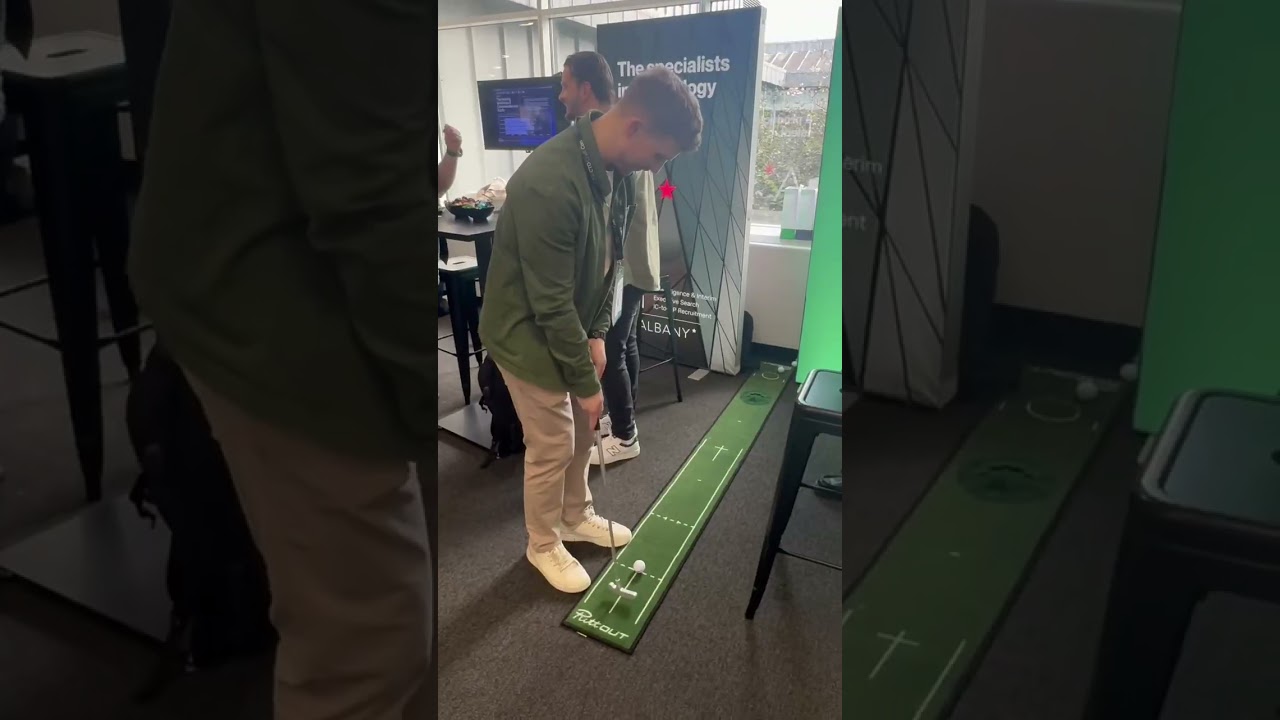
Inside CTO Craft London’s tech scene. ⚙️✨#CTOCraft #TechLeadership #cto #techevents
0:28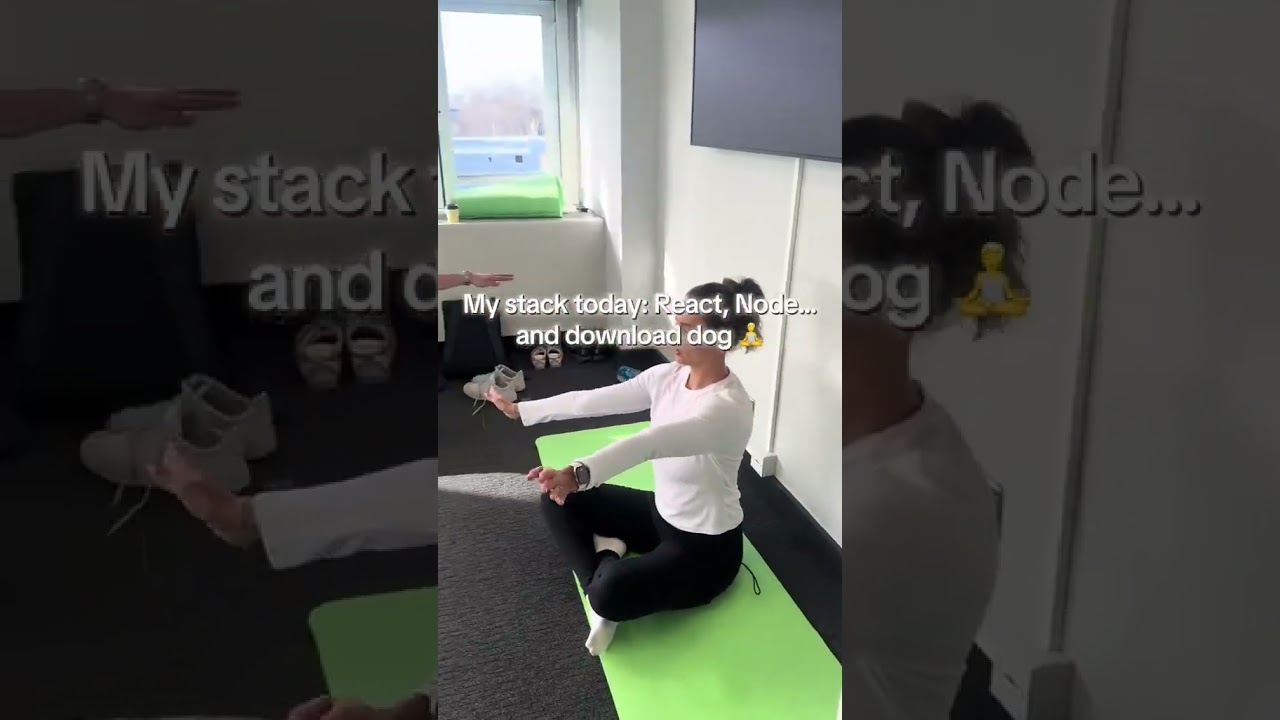
CTO by title, yogi by unexpected conference agenda. 💻🧘✌️
0:06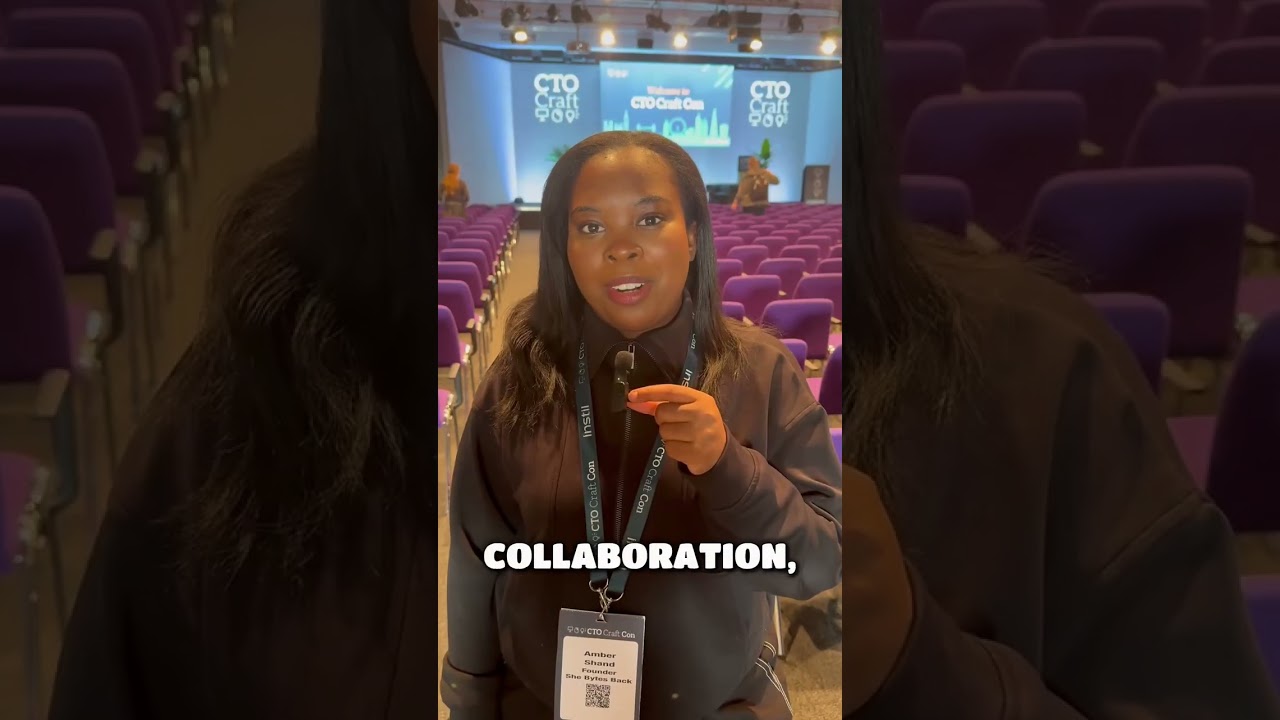
A great engineering culture requires…
0:31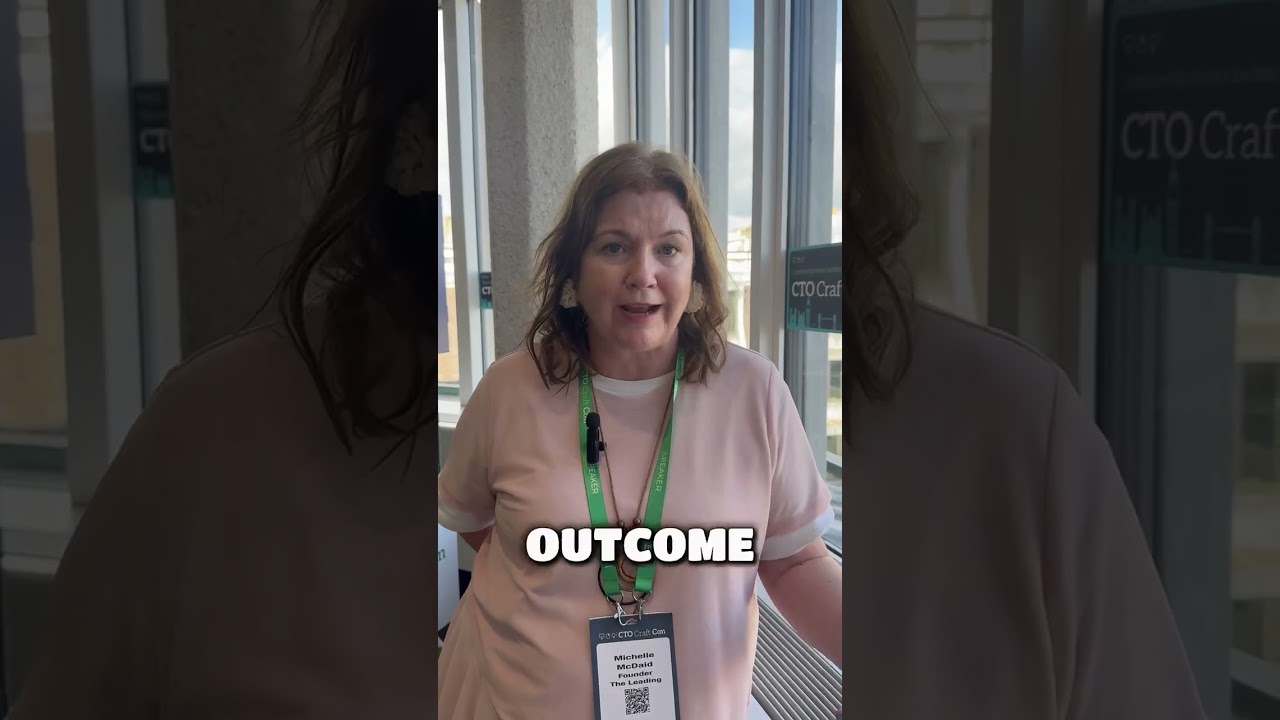
CTOs reveal the toughest part of scaling tech teams (it’s not what you think). #techleadership #cto
0:49