Eclipse Xpanse: Enabling digital sovereignty through portable cloud services
About this talk
In this talk, Marco Dangelo discusses the concept of digital sovereignty and its relevance in Europe, particularly through the lens of the Eclipse Foundation's initiatives. He introduces Expanse, a project designed to facilitate the portability of managed services across different cloud providers, thereby addressing the challenges of vendor lock-in. The speaker emphasizes the necessity for European companies to develop independent solutions and highlights the growing reliance on non-European cloud providers. He outlines the implications of digital sovereignty on jurisdictions, data ownership, and the cloud market. Additionally, Marco touches on the current landscape of AI-related technologies and the importance of open-source frameworks in driving European innovation while advocating for collaborative efforts towards a more sovereign digital environment.
Full transcript
Hi everyone, welcome to this session that is under the title of Eclipse expans enable enabling digital sovereignty. Sorry about the uh after launch the uh sluggginess. So uh what we are talking about uh in this session and first of all who am I? Um, my name is Marco Dangelo. Uh, I'm a founder of a company that deals with AI and local models, but I act as a
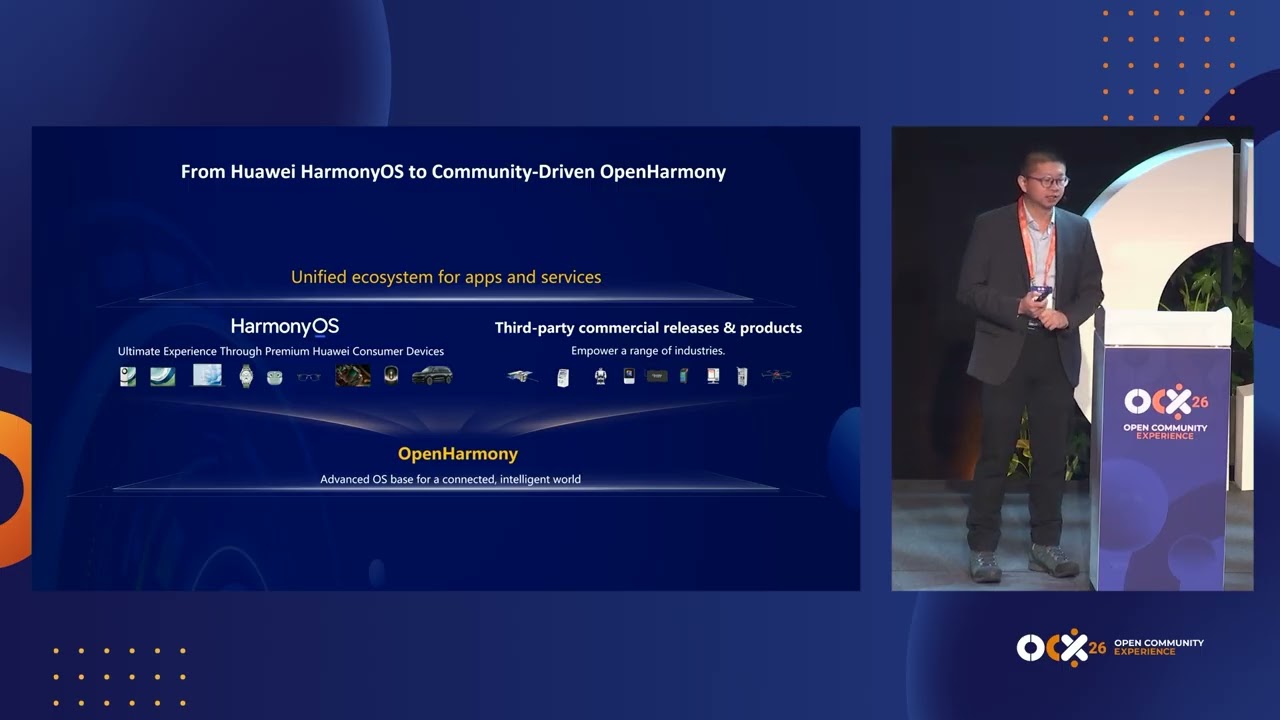
in the capacity of an external director for Huawei open source team here in Europe. I've been doing and I've been dealing with open source and cloud for a number of years. Open source since 1997. Uh, cloud since uh 209. And uh I'm uh proud of being involved in what a Chris foundation right now is doing when it comes to uh digital sovereignty and the possibility to make
something a little bit more European that it is what we will be discussing today. Uh we will be discussing digital sovereignty. We will be discussing a specific project that is mentioned and is named expanse. But we will be mainly uh talking about what happens when after expans and what can be done and what needs to be done if we want to have an impact in Europe when
it comes to uh activities and stuff. Uh let me just take it out my phone. There should be uh timer that is not here. I will use mine. Okay. So uh long story short uh digital sovereignty a lot uh of digital sovereignty discussion uh happened uh and happened uh in Europe during the last few years. We will touch base on top of that and we will explain
uh why and how eclipse is to be trusted when it comes to digital sovereignty. Uh this deck and this talk is based literally on what's happening right now in real time. uh just to give an a glimpse of how fast the things are moving and uh as I said as I promised we there will be a call to action to continue working together on those topics. So
let me see if it works and if we are able to go ahead. So Eclipse foundation everyone knows it everyone uh know uh why we are here. What's makes Eclipse completely different compared to other um open source foundation. uh the fact it is uh completely vendor neutral and it's basically headquartered in Brussell that makes one of the few uh open source foundation that are not related to
the US. Uh a lot of projects are incubated inside um Eclipse Foundation and Eclipse has uh is one of the few foundation that can not only work with software and code but can also work with specification and standards. So when there are project that deals with the CL foundation, there's also the possibility to escalate and uh elevate those project toward some form of standard to be put
in front of commissions. What has been the uh relationship with the between Eclipse Foundation and Open Service Cloud. Open Service Cloud uh that is basically an initiative that has been launched by Eclipse Foundation in 2023. uh follows a study that the kids foundation funded at the time that gave an impressive number and we were thinking about just only three years ago. At the time this study that
goes under the name of open service cloud white paper uh showed and demonstrated that at the time twothird of every digital transformation cloud migration project that were uh lending inside European companies basically were lending uh on the lap of just three cloud providers that happens to be American. So uh Asia from Microsoft, AWS from Amazon and GCP from uh from Google. uh from that uh Eclipse started
uh describing what could be a possible uh solution to this approach. So uh there's been postulated the possibility to create not only um let me say functions but entire services that can be uh put from one cler to another and the concept of portability of services and portability of data went inside this initiative. That initiative created what we have defined at the time uh a project that
goes under the name of expanse. The concept was introduced on 2022. on 2023 uh some of the uh core committer in some cases where we donated the um the expanse code base and has been incubated since 2023 2024 with the release of many versions and uh the inclusion of other services up to until the creation of some interest from other companies other vendors European ones to do
something together and that we will touch base on this eclipse on cloud uh interest group. So, but what what is expanse and why it's useful? Expanse is basically the possibility to build once a managed services. So, not just a VM, not just a function, not just a service, but a complete set of services and to move it from one cloud provider to another. So, we're not talking
about sets of containers and we're talking about sets of VMs. We are talking about a little bit more articulated proposition that goes toward the possibility to integrate deeply with the uh backplanes of those providers getting access to authentication to the billing to the uh monitoring and uh serviceability of the entire stack. So creating something that is a firstass service citizen instead of just basically some marketplace solution.
That is the idea and that is the approach that we've been following with Eclipse. But before entering the detail and before uh let me say going deep I wanted to just discuss and reframe a little bit the discussion related to digital sovereignty. Just in this conference there are there have been at no less than four talk about what digital sovereignty is what is the relationship with open
source and stuff. Uh and every sessions has explained that there's a a topic of jurisdictional control. It is not a technical stuff in many cases. It's literally uh basically who owns the data and who is the company and where do those company are uh headquartered there there the uh operational uh autonomy and strategic capabilities that are required to achieve digital sovereignty. If uh the uh best software,
best engineer, best everything is not located in Europe, it's quite difficult to say that we will be able to achieve what has been defined as digital sovereignty. The twist is that I want to introduce but uh basically uh a little bit different compared to the other session and other discussion. So when it comes to digital sovereignty usually we speak about two main things. We speak about cloud
providers. So the application, the VM, the Kubernetes whatever and we speak about where our uh email or other uh office productivity stuff resides. We cannot limit to that. And uh the SDA from the European Parliament on October last year um let me say provided and created uh um interesting paperwork of 250 pages that reported what that when it comes to what uh European company in Europe in
general pays to foreign vendors uh is in the ballpark of 270 260 billion euro that is more or less 1.5 5% of the uh GDP of the entire EU. This is not only cloud. 80% of the spending on cloud goes to nonu uh EU cloud but also 83% of all the uh digital platform real cloud or not are basically uh paid to US entities and a lot
of the uh let me say the innovation that is done in Europe uh over the time is been acquired and continue to be acquired by uh foreign countries so mainly US uh 48% means that it's a lot compared to uh what it was 10 years ago. It's basically jumped from 9% to 48%. So the problem that we tried to address is this one. We have a lot
of disproportional imbalance between what's happening in Europe and what happened in other countries. Uh as I said specifically when we speak about digital sovereignty, everyone thinks about cloud. This is the picture from literally October last year of what is not just the US hyperscaler uh piece of the pie. The important part is that if you think about what's going to happen and what's happening right now in
Europe, just a meager uh 13% of the cloud workload are provided by European uh providers. All the rest is done by someone else. And that con let me say represent uh obviously a concentration risk for a number of reasons but let the the point is that we own just 13% of the market uh of our uh cloud in Europe Europe provider owns literally four five% of the
uh market the cloud market that is abroad a little bit num a little bit uh of more numbers because I believe that you have to understand why uh there is the need and everyone knows that uh digital sovereignty good uh people not from us from EU bad but uh you have to understand what's the the number uh um are telling in a way to understand how bad
in some cases the situation is so cloud providers still there uh we went uh as I said before 13% now we moved from 27% to 13%. uh the cloud market growth has been growing in Europe exponentially and we lost 14 points in just eight year and uh as I said it's not only uh cloud so uh the email uh Microsoft 365 owns basically uh 90 um uh
90% is not is not right 90 it's all the rest so it's mainly office 365 uh plus a number of other stuff. But if you take a look at what is basically the mobile space, what are the uh Windows uh operating system and uh the uh share of Google, all those stuff are data and services that are not used here in um in Europe. Just a couple
of slide and I'm promise I finish with the data. Uh another analysis that that has been done by um the European Commission has been okay there is the cloud there is the office or uh Google uh Google platform there's also the other stuff uh application enterprise application uh CRP erm everything that is not just my mail can be closed it's literally my company can be for some
reason uh forbidden to close the balance and do the tax return at the end of the fiscal year. And if something like that happens, it's a really bad bad bad situation. You're going basically bankrupt because of that. What we see here in Italy uh in Italy, sorry, I'm Italian as you can understand from the accent, but what you see in Italy and in Europe that we have
SAP that is uh roing the ERP uh software stack. By the way, SAP it's used by even some of those uh cloud providers that mentioned before. I came from Microsoft and uh the tax returns and billing by Microsoft is done by SAP. But if you took out SAP from the um from the equation, you will see that after that there's Oracle, Salesforce, Microsoft Dynamics, uh IBM, Adobe
with other suits and nothing more. There is not a second uh European company providing enterprise software after that. So what does in we cannot have this discussion without mentioning geni by the way genai uh it's even worse uh besides mistral that has got uh more or less 14 billion evaluation we know for sure and everyone knows that open AAI google with Gemini anthropic with cloud are literally
running the market when it comes to LLM used by API Microsoft and Google are banking on top of the distribution and the foothold that they have in in the companies. So if you ask any company right now that has got uh that started doing agentic stuff seven out of 10 sorry will tell you that they're doing something with Microsoft or Google not because it's the best stock
but it's because just basically an addition stuff that they're trying to do. Having said that, having uh had the discussion about about how bad the situation, what has been uh on the table by the European Commission by uh whatever we tried through uh some regulation to counteract the uh cloud act, the visa, the uh US sanction regime. uh we know that we have to go against those
legislation because we are not safe even if the data is hosted in uh European data center if the legal entity managing those data is not in European one and the US presence I mean I can be a little bit biased but believe me in firm of uh software and cloud providers those are uh those are the numbers when it comes to um when it comes to uh
the situation uh US presence is growing massively uh in the last 10 years with the shift from uh uh office on prem to exchange on prem share point on prem to office 365 and uh the uh inception of the cloud. So let me go a little bit uh faster on that. Uh we said this situation is bad what's going to happen and what's going on on 2026.
So we know that the EU data act will be enforced this year. So something will be starting to put a a stop on a number of those uh situation that we see in the market. uh there has been uh by the uh chases uh project uh the possibility to start certifying a number of uh possibility to have uh providers that are giving to customers European customers the
possibility to buy and acquire and procure software that is digitally sovereign because it's managed and uh created here in Europe and there are a number of other uh initiatives part two that I want to mention. Uh la yesterday there was the GAX CTO Christoff Strandle that had a a session explaining where uh Gaia X is with is at the station framework and clearing out to make sure
that data moved across Europe can be certified to be moved from a European company to another one. Um always this uh between let me say last week and this week there has been an interesting tender uh from uh that's that's interesting uh from the um uh from the news maybe you have you saw that uh the um 180 million euro tender for sixyear uh service providing for
the European uh institution bodies and offices has been uh adjudicated by four European companies uh post telecom stackit scaleway and proximus and uh I'm mentioning that because it seems like like as I mentioned before that even the procurement is starting uh showing some of activities and as I said I was mentioning that because clever cloud is mentioned here clever cloud it's a a company that is part
of the equation and it is part also of the um interest group that I will mention that I will mention after so something is moving And we said there is an issue from uh a business perspective. There are something that is moving and is starting impacting on the market from the uh procurement perspective and from the uh legislation perspective. there is uh the need and the impact
that's lends on the AI side because uh if there is one hot topic right now that is driving a lot of investment is the AI and the possibility for the uh European company to try to not lag behind like we're lagging on the cloud uh compared to other uh to other areas of the world like uh US and China it's based on the uh on the AI
when it comes to AI and that's are moving away that give me the possibility to move away from the most number theorical stuff to the more technical one when it comes to AI uh there are two main things there are the open weights models like mistral lama except falcon granite the one that you know and that comes partially from China uh mistral from Europe some residuals part
part from the US there is the uh closed proprietary. Whoever will win and what will be the market from one year from uh from now it's almost impossible to say because the speed or whoever says that is able to predict what where we will be in one year or two years uh it's just basically lying. It's quite clear that the big investments are put on the table
by US and China. But uh one thing I want to make it clear whoever will win the race for uh the models open or close uh large model uh small models uh opensource has already won because everything that is under uh generative AI uh training stack inferencing stock uh agentic OS is based on open-source projects and product. So if you discount the GPU accelerator and the parts
related to where we are putting the stuff uh runtimes are uh containerd docker OCI uh the orchestration can be done by kubernetus by ray by kserve cube flow that is related to uh what we're doing the same goes for expanse when it comes to the serving uh the uh the models and serving the um the access to uh vlm uh triton or um up to the models.
So a lot of those stuff it's basically related to open source. What we have to make sure that will uh that will will happen and will still happen. We have the possibility and we have to maintain the possibility to run those workload specifically the new one on uh every hyperscaler every sovereign cloud and the possibility to move uh from one side to another when it's needed. Uh
basically we have to maintain our options open. Uh it means that when if we are making some architectural choices today because it's the most convenient it's the most uh fast doesn't mean that those those choices have to remain the same. So what and that's uh gives me the hook for for expanse. Uh what expanses for and who expanses for uh expans has been um let me say
created to avoid locking. So companies that have to uh stick to a a technical decision that has been made at the start of a project and then cannot move for number of reasons and uh to avoid the lockout. The lockout it's what pertains to the CSP the cloud solution providers. So if 87% of the market is owned by the hyperscaler uh what does the possibility for small
providers the European ones uh is on the market reselling those hyperscaler license doesn't work too much. So one thing that expanses meant to is to ease the possibility for uh those cloud providers to get uh application that has been uh put in some other cloud providers hyperscaler and move it back to the uh to more locals. It's for ASV and service providers. The one that wants to
give the possibility to have a provisioning engine that once we have defined how to provision a workload, a SAS application on one cloud provider, we can move to another one. It's for the end users, the one that have to buy services and they want to buy something that is not by definition going to stick to a single uh cloud provider because it's literally the one that sold
and created the look the situation. uh how it is created uh what is basically uh represent. So uh expans it's a a runtime that gives the possibility to uh orchestrate the creation and destruction of um application uh using uh an uh a definition language that gives the possibility to describe how those components that can be uh kubernetes storage that can be uh VMs and other services. So
it's being a service composition. It's basically the possibility to have different services put together to create this stuff and assets of uh plug-in that gives the possibility to deploy on OpenStack, Kubernetes, AWS, Asia, Google Cloud, obvious cloud basically depending on uh which runtime do you have under underneath. Uh if we and we will not do it right now on stage but approach me if you want. If
you want to take a look at the architecture, you will see there's a number of agents that are basically given the possibility to define how this uh work zone can be uh asked, can be requested and there's an engine expanse that will be working with the cloud provider through a number of services that are as I mentioned before not just on just the possibility to deploy VMs
on or um or containers uh but basically the possibible ility to integrate with the console with the access management the uh the billing and other metrics uh that stuff the integration of the underlying uh control plane it's a thing that we achieved with the more open uh service providers the one that are based on open source it's a thing that you remember that when I mentioned that
Eclipse is one of the only foundation if the not the only foundation that can uh help to craft the standard and put it up to uh uh for the adoption uh there there's the need to nudge a little bit uh those other providers to open up their stacks and if we don't push if we don't put pull together our resources maybe those operators that are working with
the hyperscaler will not be opened uh in the near future. So we will stick to we provision and we manage using uh open tofu or whatever uh lit system we want to uh we want to use from the one that are supported by um by expans but we are working in the direction to make sure that those other entities receive the message that they have to cooperate
and behave inside a framework of reference that is uh good practice for the European European companies. I mentioned the uh OCL the open service cloud configuration languages is basically yet another configuration language to describe uh the services that we need to put together starting from machines from databases from other services to be able to describe and provision uh the application in one of the uh providers to
be moved to another uh to another provider uh of of the same uh the same kind or complete different kind moving from uh Chinese provider to a US provider from European uh uh cloud solution provider to hyperscaler and and vice versa. So how uh expanse runs basically uh a service through its lifespan uh we register we define what a service is and through the OCL registers inside
uh the catalog of services that are available. We deploy those services using terraform, open tou, anible everything that is basically uh to be used to do uh infrastructure as a code that can be uh understood by the underlying platform. We don't go too much in deep. We don't go for example to use bicep when it comes to uh Asia when there's a provider for open tofu and
terraform available. we uh integrate the operation and the monitoring with what is the uh at the time provided by the uh platform. So the monitoring uh the patching the updating of the of the systems and as we said we want to push farther in getting the access to the underlying uh provisioning system for the contain of the uh closed hyperscaler and uh we work and we're working
with uh I was mentioning before Gax with the partner with Gax to understand how to put together uh the data spaces uh at framework that they have with the possibility to understand the data that is underlying the services and move not only the services but also uh and also the data. And when there's a migration where there are retirement of a service, we do uh basically the
cleanup. So uh closing every resources that was consuming uh credits, token and stuff taken away and uh moved and make sure that is basically uh cleaned before moving to some uh some other services. uh a request to do one of those services. Uh how it works there is basically uh users that are uh asking to uh define and create a service of some kind. uh this services
passes through the uh Eclipse orchestrator that can add uh services from the catalog that can that can add uh service endpoint uh authentication provision everything that goes from the services to the secrets to uh everything that is related to the monitoring and once the service has been the servers instance or instances is created basically give it back the possibility to user to consume it. uh if you
remember that we said that there are a number of scenarios there's the scenarios of the cloud solution provider creating the catalog and putting in front of the customer the possibility to uh just deploy and instantiate services or on the other way around there's the uh ISV uh vision where I'm the SV I have to create my services and put in the catalog of expanse and other uh
implementation that can be literally left inside the um the cloud solution provider their implementation. But this is not only technicalities. This is not only mapping of the uh what expanses doing with uh the EU regulation. uh we all know that there are a number of uh standards a number of uh acts that have to be uh let me say understood and where you have to be and
manifested the fact that you have to be maintain a compliance. We tried to make sure that expans align with uh those regulation and also with the checklist that gives the possibility to understand if a service is a European uh one or not and where we are today and where it fits. So uh we started uh basically creating the possibility and tested to do a cafka uh provisioning
posress uh provisioning. We did some of the testing with MongoDB uh community edition because uh we uh still had this long discussion with MongoDB uh for the commercial side on how to deploy that uh supporting their licensing model or not. licensing and building as I said it's one tricky part that we have to to address in term of genai uh we had some of the testing testing
of uh the uh local uh models from mistral to try to see if it works or not. We did also some testing with Intel to be able to understand how to drive their uh um uh open veno and uh uh Opia and as I said uh data spaces it's a thing it's a discussion that we are doing doing in right now with with GAX and that's leads
me to uh let me say the most interesting part uh of this talk if I can say so expans It's a project. It's one of the project that we are pushing inside the Eclipse. But as I said, by no means it's one of the uh only one needed to address the big complexity that cames from the regulation side and the mass market adoption of non European services.
uh while we were pitching these uh ideas and the code that we were writing to uh other companies, we found interest from a number uh of companies that are running their own open source stock and they've been showing interest in saying, "Hey, uh we're doing something that more or less seems to align with your vision and is creating a little bit of uh a new puzzle, a
new pieces of the puzzle to go on uh and address this this situation for example uh we've been uh we on boarded we've been talking with uh one company called vates I didn't mention there because we had any talk from from them uh they are working on the hypervisor space so one thing that burned very uh let me say very hard some of European companies is that
uh European uh enterprises and public sector relied on some US hypervisors that decided to skyrocket their prices and price model. So there's been a huge uh wave of migration for example from VMware to someone else proxmox uh xpng whatever because the uh this is the other side of the lockdown when you are locked down uh who owns the key of your application of your house can decide
to do whatever they want so uh hypervisor it's one thing we had uh interesting discussion and we on boarded a clever cloud from France uh and that's why I mentioned the uh the tender that they've been able to won uh to win with the grouping of a number of companies because those people were creating uh the scale as a a smaller scale if you want. So the
possibility to access uh managed services of some kind and they need uh some way to some technologies to accelerate the speed of the proposition and the creation of services. uh we joined forces with Gaia X running the uh interest group because as we said GAX is taking care of data we are taking care of services so the two things get together and in term of digital sovereignty
one of the big biggest examples of looking it's uh the data uh the data plane uh if my data are embodied and locked inside some services some providers if I have not teraby pabyte of data even if I'm storing it locally sometimes can be a problem. So with them we are addressing this stuff. What is the uh and why I'm mentioning the uh the Eclipse cloud interest
group because as much as X fans can be of interest and it is basically for for me but uh there are always the opportunity in the market to find something newer, something bigger, something shiner. Uh I was at the CubeCon in Amsterdam uh last month. They had an entire session on uh digital sovereignty and the discussion that comes out of cubecom was exactly the same. Uh the
whoever owns the uh AI models the stack will be open source and uh there will be the biggest uh the biggest provider of uh uh topics and rhetoric about digital sovereignty are the biggest upscaler. So here in Brussell there will be uh there has been uh Microsoft conferences on um digital sovereignty. Uh AWS is pitching the fact that they've created their uh digital sovereignty cloud. So there's
a lot of marketing discussion. Sometimes we need to go back and find what are the companies that are providing real code. So uh this is not let me say and I'm going to close on that. a talk about how good expanse is a project. Uh it's more a talk about expanse can be one uh piece of the puzzle. You like way more Kubernetes. Please adopt Kubernetes. Adopt
whatever will give you the possibility to work with uh a stack that can be moved. As I mentioned one of my role it's it's in Huawei. We have provided on the uh open source uh world uh cube edge and volcano that are two of the biggest from the very small edge side kubernetes to the massive management of uh millions of uh pods for uh for kubernetes. So
that's fine whoever we want to do that please uh try to work in that direction. one practical stuff that we can do as I said under the umbrella of this interest group that is not yet a working group so we are just basically pooling resources and understand if there can be common ground uh there's expanse there's biscuit the decentralized authorization token that is provided by uh clever
cloud there is the uh xpng uh the open enterprise virtualization platform provided by vades there's the uh W uh 3C link data everything that is related to literally uh at the station of uh data movement that is provided by uh by GAX and we started basically working with this part. So what we are running right now weekly by weekly depending on where we are discussion on where
every single project is. We are trying to uh create a steering committee to define how to bring together those projects in a way that will get the possibility to remain as much as aligned as possible. And uh the idea is to go back on the uh standard table describe something that will be aligned with the regulation and create code to support those uh those regulation and those
needs. And uh I would say uh five ballot points to uh recap. As I said if for the last 30 minutes that was the allocated idea that uh we had for uh for the uh for the for the talk uh sovereignty cannot just be marketing. We cannot put sovereignty on uh AWS data center, Microsoft a scroll of the code in Switzerland or red out we are good
guys uh whenever there is no uh the possibility to counter the uh the decision of external actor on what they do with with our stuff. So sovereignty is a stack problem. Uh we do deploy uh sovereign stack. We addressed parts a lot of the a lot of the discussion uh European dependency it's not shr from uh other external actor it's not shrinking it's growing that's a thing
that uh sometimes we forget about that it's not that we are running some government that are trying to get rid of Microsoft get rid of Google and that is it is a good sign but now the the unbalance it's uh going in that direction. So we have to stop this uh this approach. Uh generative AI runs on open infrastructure. The harness that it's beyond whatever uh whatever
um agentic uh proposition is open source uh but we have to continue pushing in that direction. So uh we have few models in Europe. Okay, work with them. If we have to work with model not created from Europe, is it open source or not? Make sure that those models run on top of something that can be moved from one side to another. Eclipse response it's one of
the pieces of the puzzles as I said uh managed services not uh a smaller unit possibility to run on any cloud and the most important part uh let's maintain the discussions open. So uh the Eclipse cloud interest group is here. Uh it's free to access for whoever it's inside the uh Eclipse Foundation as a member. It's even free to access if you are not part of the
Eclipse Foundation because through Gaia X we can proxy the possibility to on board companies and make sure that are uh basically there uh and their voice can be uh can be heard. get involved. Uh project Eclipse or interest group Eclipse cloud or the Eclipse cloud um distribution list. This is not fancy. There's no QR code. Uh we are just revamping the landing page to be a little
bit more approachable. But the point is uh talk to me, reach out to me, reach out to the any other um Eclipse Foundation program manager. They will steer you toward the right person and the right discussion. And for that I would say uh questions are better than uh let me say cheers. So the talk is more or less finished. If you have any question even the most
I mean brutal ones more than happy to answer right now or to uh have a talk off the record uh outside the desk and that's it. >> Is there any question? Okay. >> Perfect. Thank you. >> Yeah. What about the edge? >> Yes. Because mostly you you spoke about >> But age edge is an opportunity for Europe, right? >> Absolutely. And uh whoever comes from the cloud
solution provider side knows that pretty well because uh there has been uh so uh it seems counterintuitive but it is. uh the cloud runs on the edge and the services runs on the edge. If you talk to uh teleoperators, they will tell you when I talk with the usual teleoperators also in Italian uh moving the core it's not an issue. Moving the edge, it's an issue because
the edge means that for teleoperators every radio towers is running something. There are billions of investment needed to do that. Uh on the other side uh there is a there was some very uh tricky situation uh couple of months ago in Italy when the government said okay we can uh just take out the uh power or not considering uh any more critical the power powering of the
edge uh um stations for providing connectivity and there were all the tele operators say what are you talking about? So you leave the edge fi fiber goes down no one get access to the cloud the cloud stuff. So you're right when you say that the edge is important. Uh remember that I mentioned two things and uh I mentioned other projects and other programs that are right now
with funding from uh the European Commission trying to push and explain and foster the creation of uh offering for the edge. uh what uh what I mentioned and not exactly uh Aasang is that expand has been or expans has been originally contributed by uh Huawei uh for the Huawei cloud. I mean let's be blunt for Huawei people having something that can be taken away from some cloud
provider and putting on the um uh on premise installation. Huawei is in Europe mainly sells hardware sells storage. So uh the uh providers that are still buying Huawei hardware are the ones that are uh the most uh let me say interesting for for an in that. But I mentioned also that Huawei uh contributed one of the most successful project when it comes to the uh neutralization of
the uh connection to the um uh uh to the to the back end that is cube edge. So there is when it comes to edge to be honest a lot of uh lock in coming not from the software but coming from how the infrastructure is designed. Uh if I think about uh not the cloud but entire the entirety of services uh the architecture that are designed to
provide the scalability and proximity of services and data are the one that are creating the locking. uh to be honest even the uh run uh infrastructure that are used to provide connectivity on mobile devices are the one that are not easily move movable from one vendor to another so uh that area it's an area that is even more architecturalheavy there is not to be honest a play
from those provider that I was mentioning to you that are targeting that area so yes uh Microsoft is targeting with Azure local uh the possibility to run something on the edge that is a a drop in on the ocean about the complexity and the money that that I saw that but we have to have a discussion about the the architectural and how the project that I mentioned
before are trying to to address that I know that the answer it's quite foggy uh it's complicated uh it it requires another session to discuss the edge uh I saw that someone was uh was saying I was at CubeCon CubeCon there was an interesting uh demo the first keynote the first day an entire uh in uh it's a glider aliant in Italian in Italian so a project
that was able to run Kubernetes clusters on a glider flying in the sky uh made possible just because of cube edge and so uh the edge the edge cases of the utilization of edges uh literally uh without without Okay, so I would say available for any other questions. Thank you everyone. Thank you so much and enjoy your continuation of OCX.